 EN
EN
 MAY
MAY  TH
TH  CHT
CHT  BUR
BUR  FIL
FIL  HKM
HKM  ID
ID  LAO
LAO  SIN
SIN  VIE
VIE 
Why Sustainability Documentation Matters When Procuring an LCD Video Wall
ESG compliance review rarely happens after the contract is signed; it happens during the decision stage, when the evaluation committee scores bids. For an LCD video wall project, reviewers look for traceable documentation: standby and power data measured under stated conditions, structural and thermal specifications, and certification from recognized third parties rather than the supplier itself. A bid with only marketing language — “eco-friendly, energy-saving” — is hard to score and easy to challenge; a bid with verifiable documentation is easy to approve. Before drafting the tender, use our LCD video wall procurement checklist to map every required document from quotation to acceptance.
01Item 1: Standby Power Design in Qtenboard LCD Video Walls
Most LCD video walls in institutional deployments do not run at full brightness around the clock. Office lobbies dim after hours, command centers reduce content overnight, and campuses schedule signage by term time. Standby power design determines how much energy the wall consumes in those idle hours — and it is one of the first items ESG reviewers check.
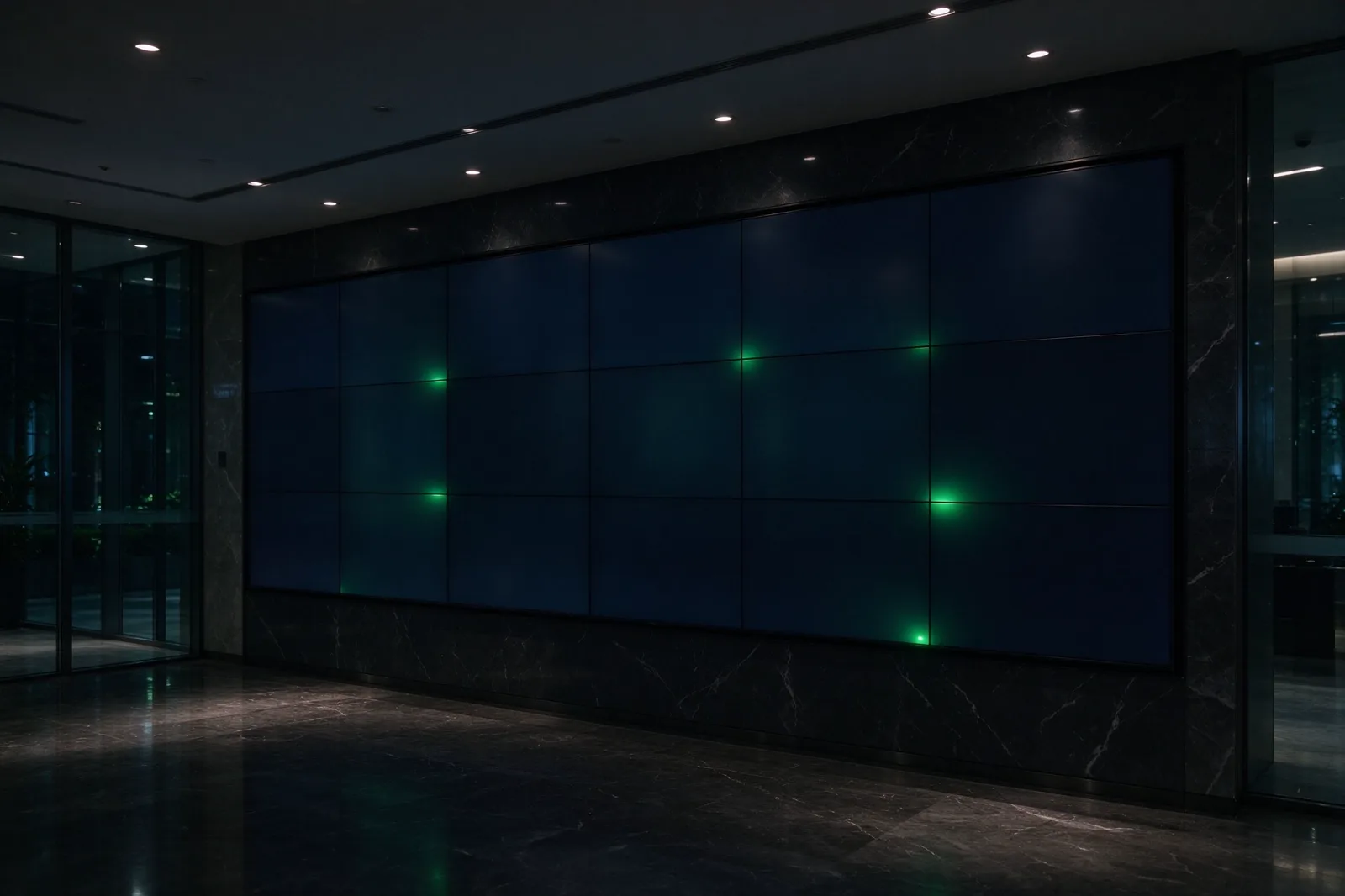
A responsible standby power video wall specification states the standby figure and how standby is triggered: signal loss detection, timer, remote command, or central control. Qtenboard LCD video wall panels are designed with a standby power mode of ≤3 W per panel. A 3×3 wall in standby draws about 27 W instead of the 1.62 kW it would draw at full operation — roughly 1.7% of peak draw. Over five years, that idle-hour saving is a measurable part of the total cost of ownership — request the standby figure and its test condition in the RFQ.
02Item 2: Heat Dissipation Structure in Qtenboard’s LCD Video Wall Panels
Heat is the main enemy of long-running displays. A well-designed heat dissipation structure keeps panel temperature stable, protects the LED backlight, and reduces the HVAC cooling load — lower energy consumption for the whole room, not just the screen. For procurement teams, thermal documentation is both a reliability and an energy requirement.
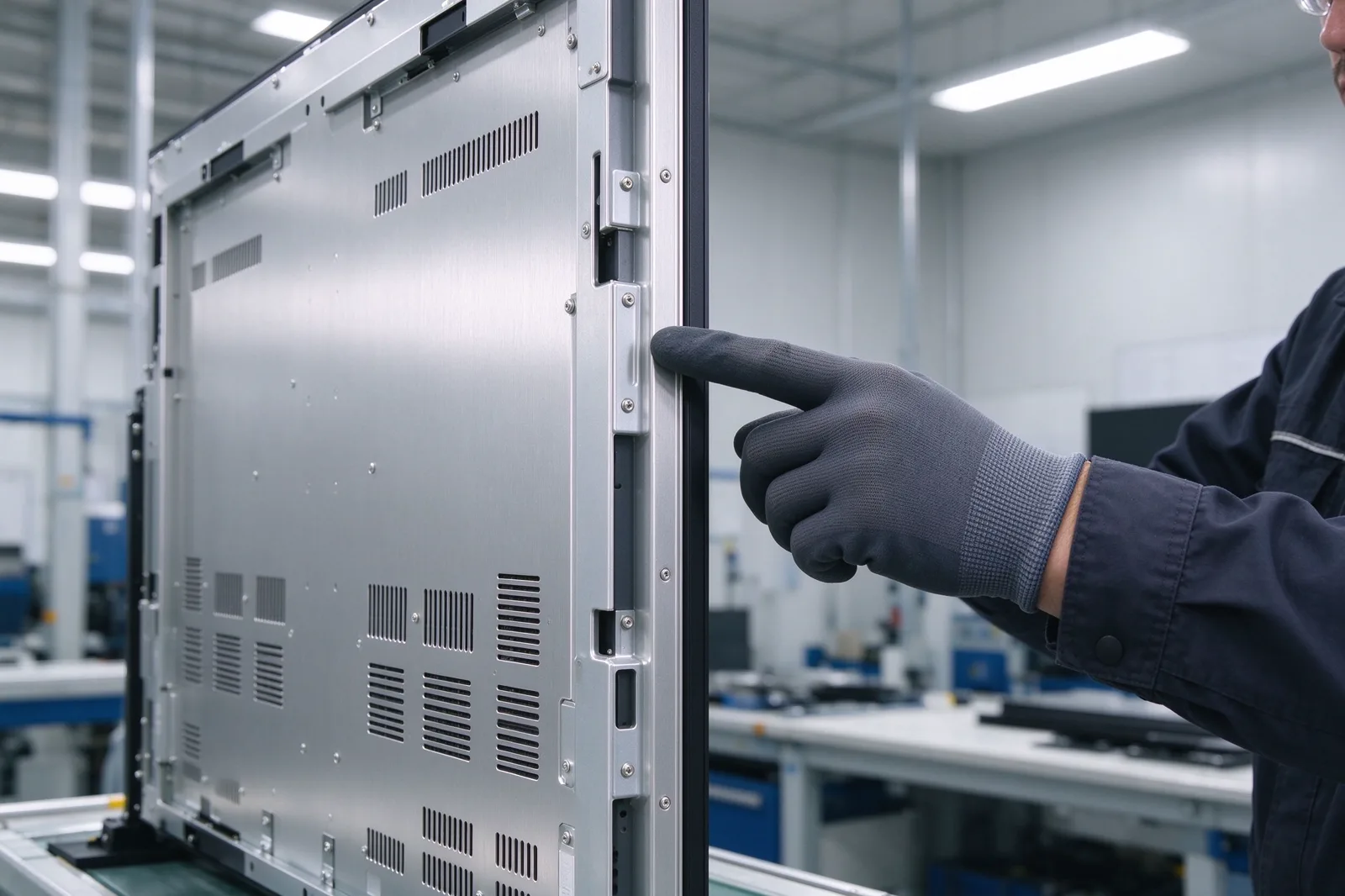
For a heat dissipation design display, request the structural documentation: casing material, ventilation design, anti-static and anti-magnetic-field protection, and the operating temperature and humidity range. Qtenboard LCD video wall panels use a strong solid metal casing with anti-static, anti-magnetic-field, and anti-interference protection, and are specified to operate at 0°C–50°C with 20%–80% non-condensing humidity — the envelope that defines both reliability and cooling energy. For a deeper look at how panel structure differs by technology, read our technical comparison of splicing screen technologies.
03Item 3: Material and Environmental Certification for LCD Video Wall Panels
Panel longevity is itself an environmental attribute. A panel that lasts longer means fewer replacements, less manufacturing energy, less packaging, and less electronic waste. An LCD video wall panel rated at about 60,000 hours — roughly seven years of continuous 24/7 operation — avoids at least one full replacement cycle compared with a shorter-lived product.
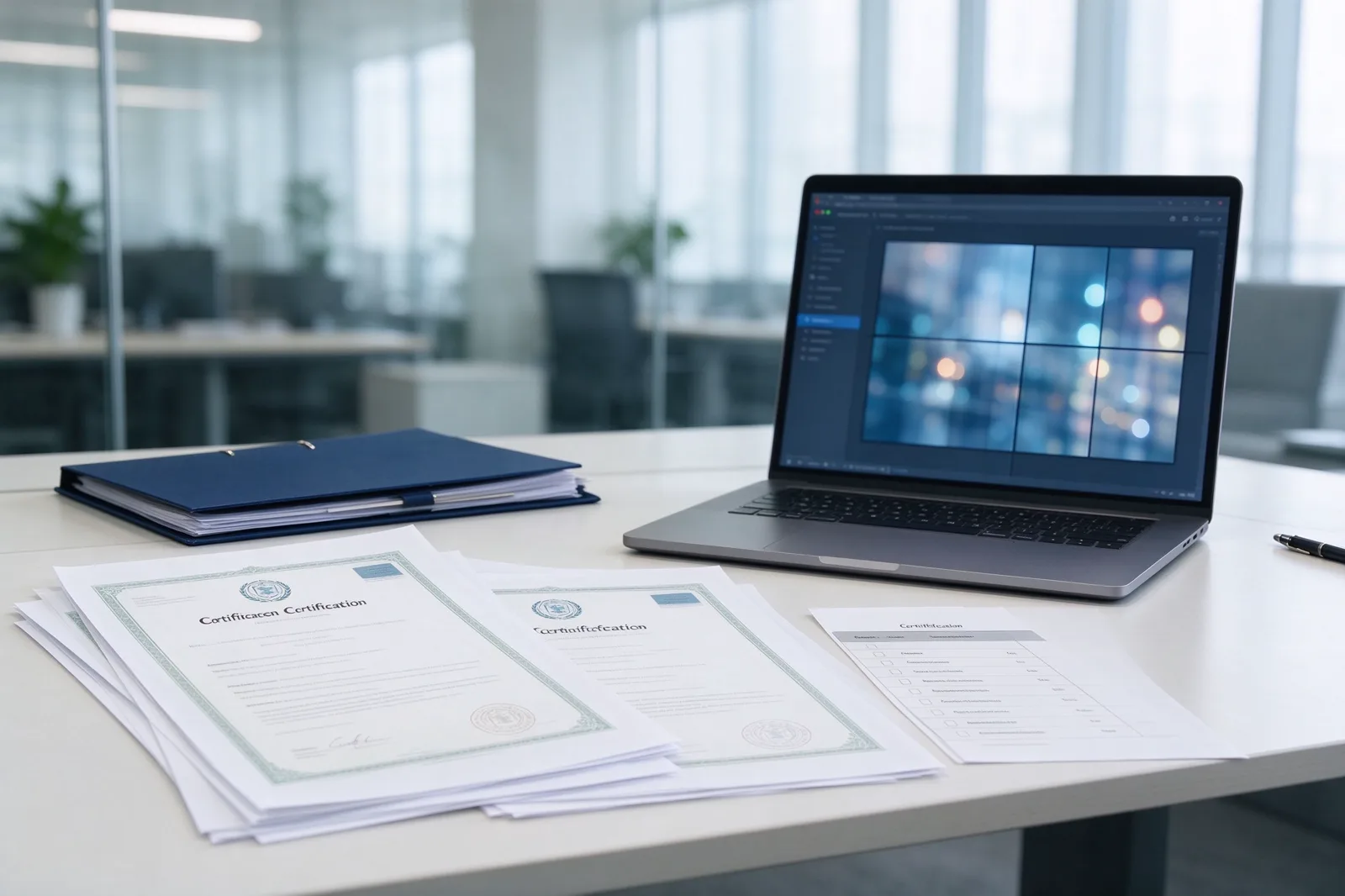
For material environmental certification, request the document types that are standard in commercial display procurement: material compliance declarations (RoHS and REACH type), packaging and recycling documentation, and any energy-related certification the supplier holds. The verification principle is simple: require third-party certification, not a supplier’s self-declaration — a self-printed statement is not evidence; a certificate from an accredited body, with a checkable report number, is. Name both the certificate and its issuing body in the RFQ.
Representative LCD Video Wall Deployment Scenario
The scenario below is a representative illustration built from Qtenboard’s standard product parameters. No client name, project figure, or award is implied.
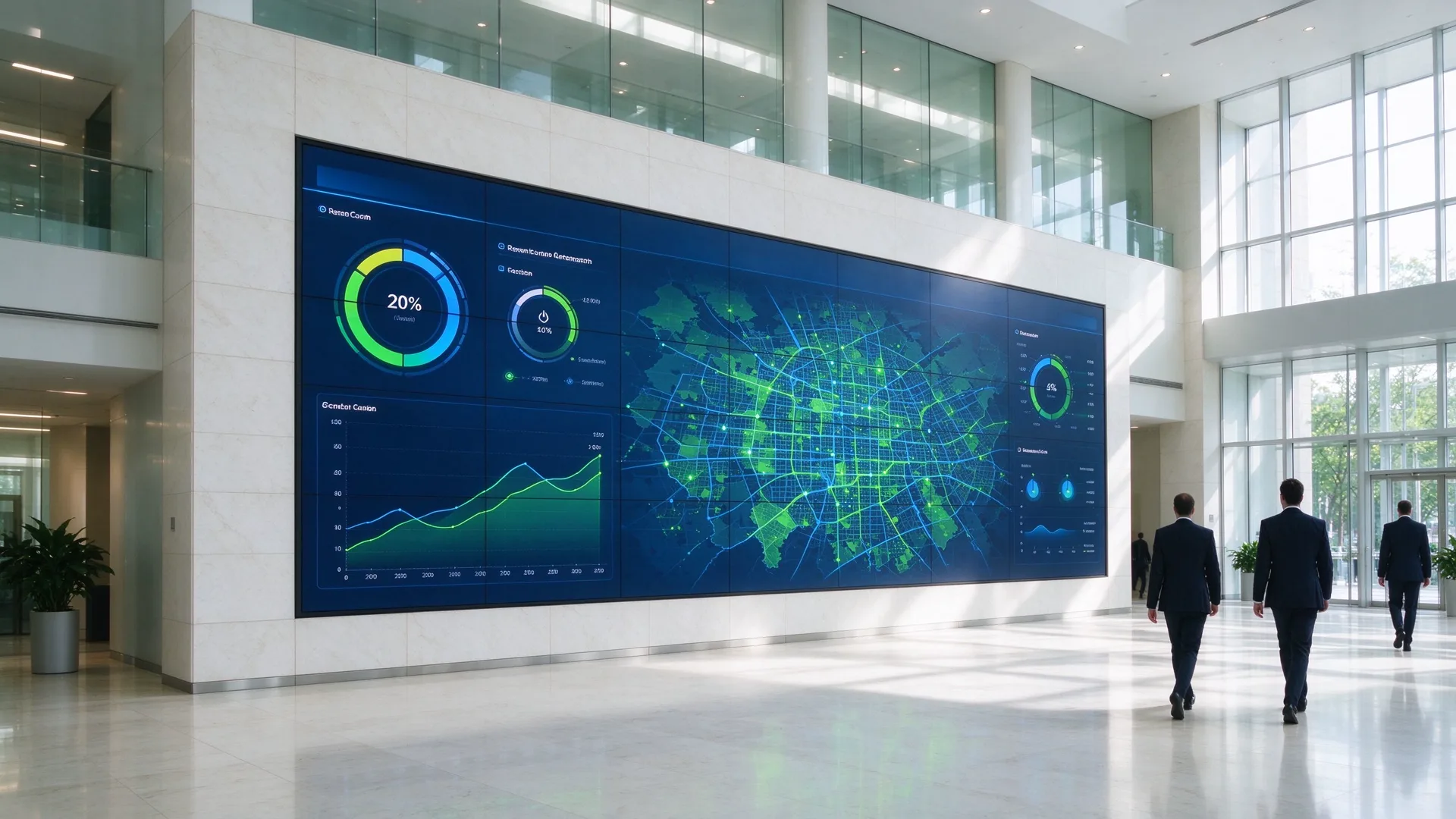
A government-affiliated institution issued a tender for a lobby video wall with an ESG compliance requirement. The original specification contained only the phrase “environmentally friendly and energy-efficient,” with no verifiable indicator. The procurement team revised the tender using three documentation requests: standby power design, heat dissipation structure, and material certification.
Qtenboard’s LCD video wall submission responded to each request with standardized data: a ≤3 W standby specification with its test method, metal-casing heat dissipation parameters with the operating temperature and humidity range, and third-party material compliance documentation. Because every claim was tied to a document, the committee could verify each item before award, and the ESG review closed without follow-ups. This is the same documentation package Qtenboard prepares for every ESG-oriented LCD video wall tender.
A Sample LCD Video Wall Sustainability Verification Checklist
Adapt this table for your tender. Each documentation item should be named in the RFQ with the specific data required, so supplier responses are comparable.
| Documentation Item | What to Request | Why It Matters |
|---|---|---|
| Standby power test report | Standby power draw per panel and how standby is triggered (signal loss, timer, remote, central control); test method and conditions | Verifies idle-hour energy consumption; auditable by ESG reviewers |
| Heat dissipation structure document | Casing material, ventilation design, anti-static and anti-magnetic protection, operating temperature and humidity range | Confirms long-run reliability and the cooling load the wall adds to HVAC |
| Material environmental certification | Third-party certificates (RoHS/REACH type declarations), packaging and recycling documentation | Proves compliance without relying on supplier self-declaration |
| Panel life test data | Rated life to half brightness (hours) and the test standard used | Supports replacement-cycle and e-waste assumptions in the ESG review |
Qtenboard reference values: ≤3 W standby · 0–50°C / 20%–80% operating conditions · ~60,000 h panel life. Require each supplier to submit its own measured data with test methods.
FAQ: LCD Video Wall Questions from Procurement Teams
Does an LCD video wall need special certification for government tenders?
There is no single universal certificate for an LCD video wall. Government tenders typically require material compliance declarations (RoHS/REACH type), energy data with a stated test method, and any certification required by local law. Ask the supplier to map its documents to each tender clause.
What’s a normal standby power range for an LCD video wall?
Well-designed panels typically draw 3–10 W in standby, depending on panel size and control electronics. Qtenboard’s standby power video wall design is ≤3 W per panel; request the test condition so the figure is comparable across suppliers.
How does heat dissipation design affect an LCD video wall’s lifespan?
Stable panel temperature protects the LED backlight and driver electronics, the components that age fastest. A sound heat dissipation design display keeps panels within their rated 0–50°C envelope, supporting the ~60,000-hour service life that reduces replacement frequency.
Can Qtenboard provide third-party certification documents for an LCD video wall RFQ?
Yes. Qtenboard’s technical team provides standby power data with test methods, structural and thermal documentation, and material compliance certificates in RFQ-ready format. Email your tender requirements and the team will prepare the package.
Conclusion: A Verifiable LCD Video Wall Sustainability Package
Three documentation items turn an unverifiable “sustainability” phrase into a checkable specification: standby power design with its test method, heat dissipation structure with operating conditions, and material environmental certification from a third party. Add panel life data, and the ESG review can approve — or reject — on evidence, not impression. As the scenario above shows, a Qtenboard LCD video wall submission provides all three in standardized, RFQ-ready format; the technical team can provide the complete package on request.