
 EN
EN
 MAY
MAY  TH
TH  CHT
CHT  BUR
BUR  FIL
FIL  HKM
HKM  ID
ID  LAO
LAO  SIN
SIN  VIE
VIE 
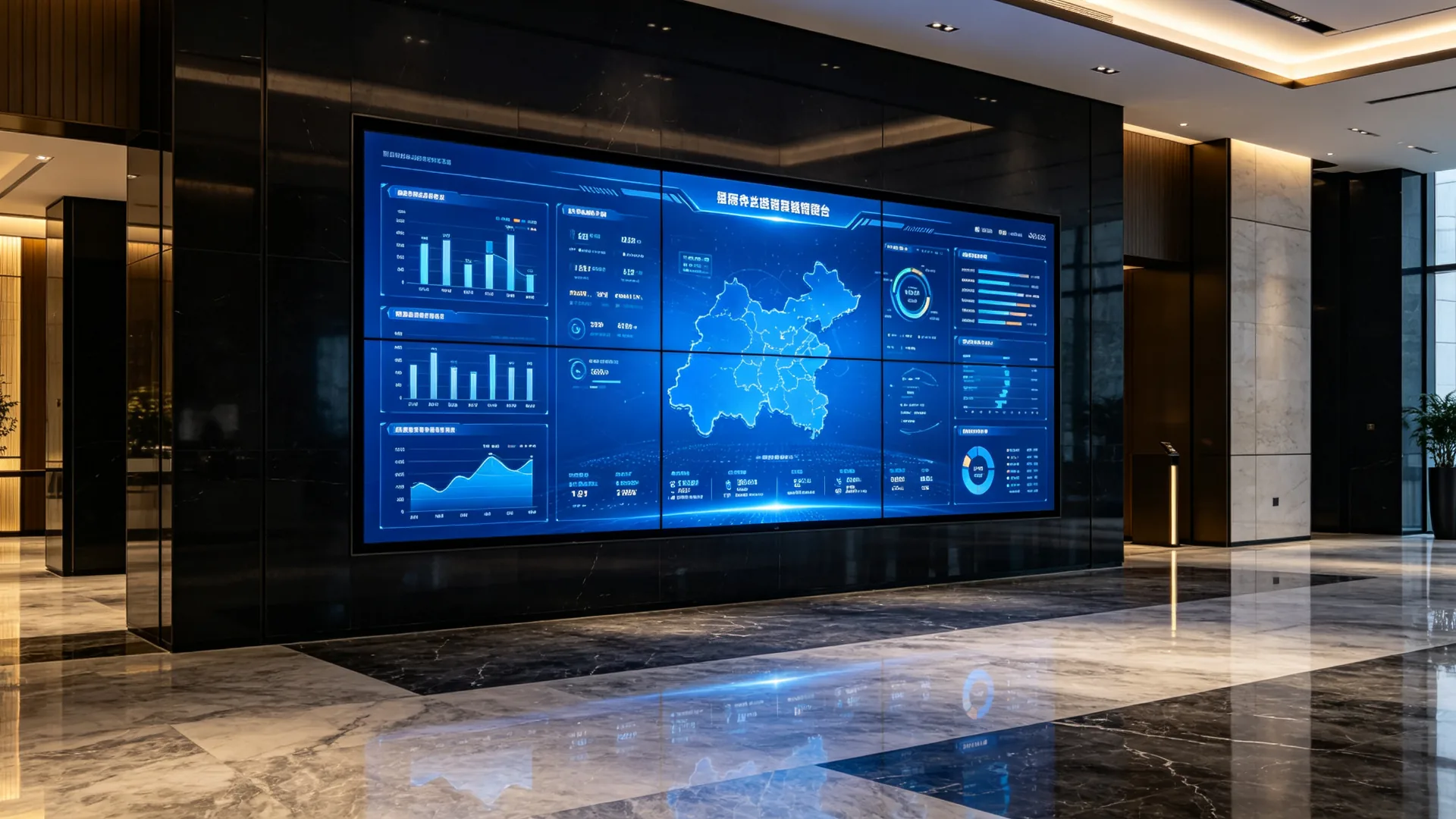
If you are budgeting an LCD video wall for a control room, university campus, or flagship showroom, the first number a supplier sends you is a per-panel price. That number is useful, but it is not the number your finance team needs to approve a project.
This guide breaks down the real LCD video wall cost into four stages — panels, controller and signal processing, installation and structure, and five-year maintenance — and gives you planning ranges for 2x2, 3x3 and 3x4 configurations. It is written for B2B buyers, system integrators, and project owners who need a defensible video wall TCO model rather than a marketing brochure. All figures are typical ranges for budgeting, not quotations; actual pricing depends on panel size, brightness, brand, and region.
1. Why a "unit price" quote gets your budget rejected
Here is a scenario we see regularly in procurement cycles. An organization plans an annual display budget. The procurement lead collects per-panel quotes from three suppliers and submits a request for approval. Finance pushes it back, asking the same question every time: "What does this system actually cost to own over five years — including installation, controllers, power, and maintenance?" The quote only answers "how much is one panel," so the budget cycle stalls.
The fix is not a cheaper panel. It is a complete cost model. Present the four-stage breakdown below and the discussion moves from "why is this so expensive?" to "which stage should we optimize?" — where a procurement decision belongs.
This is a typical scenario, not a specific client story. We do not cite named customers or fabricated numbers: a credible TCO model should stand on transparent assumptions.
2. LCD video wall cost: the four stages
Treat the total cost as four layers. Missing any one of them is how budget overruns happen.
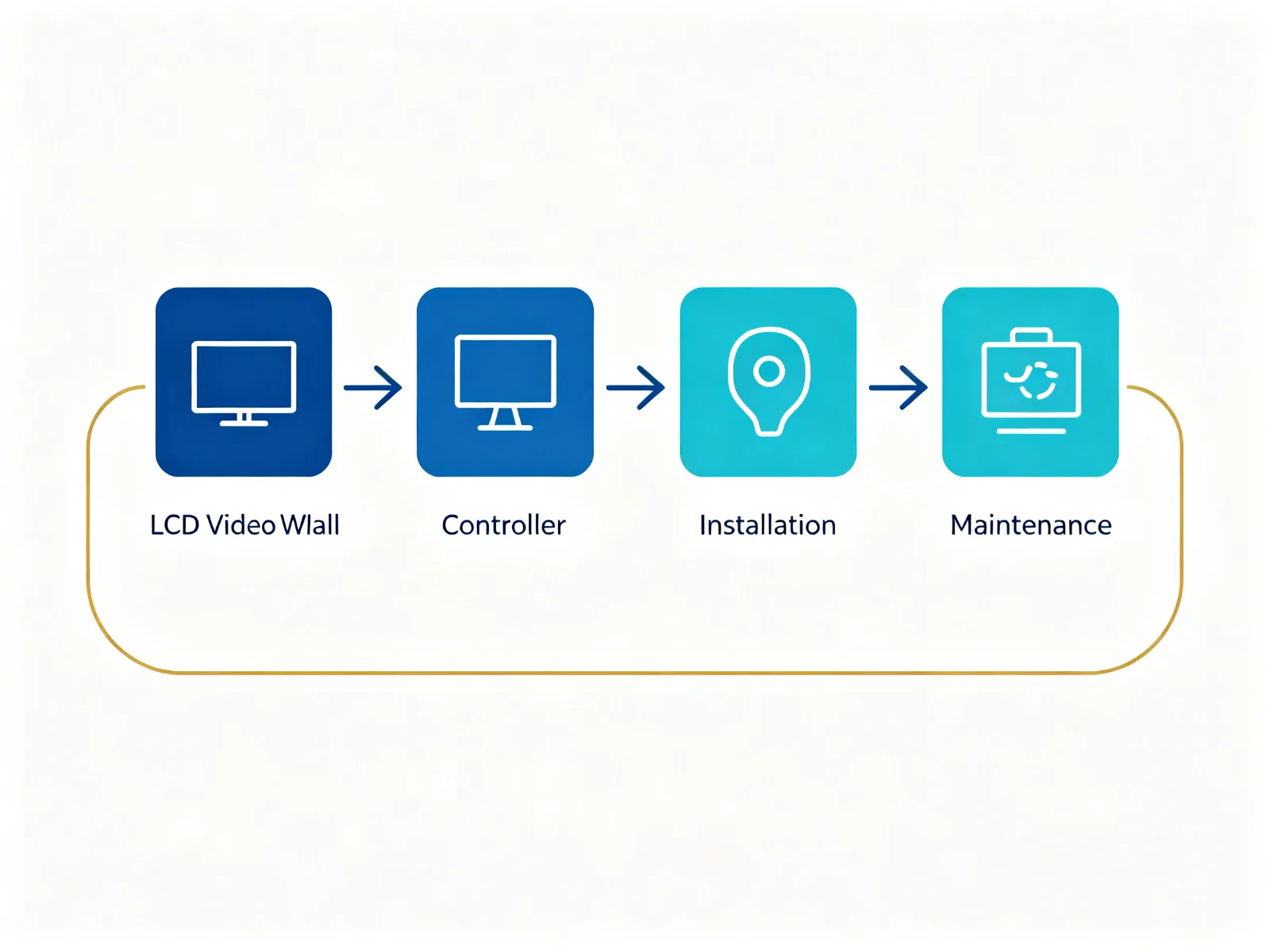
| Cost stage | Typical share | What drives the number |
|---|---|---|
| 1. Panels (DID LCD units) | 55–65% | Panel size (46"–55"), brightness (500–700 cd/m²), bezel width, industrial DID grade, brand |
| 2. Controller & signal processing | 10–15% | Video wall controller, input count, 4K/8K processing, redundancy options, cabling |
| 3. Installation, structure & commissioning | 15–20% | Wall-mount frame, aluminum profiles, cable sets, on-site labor, calibration |
| 4. Maintenance, energy & spare parts | 5–10% | Backlight life, power consumption, service contract, spare panel strategy |
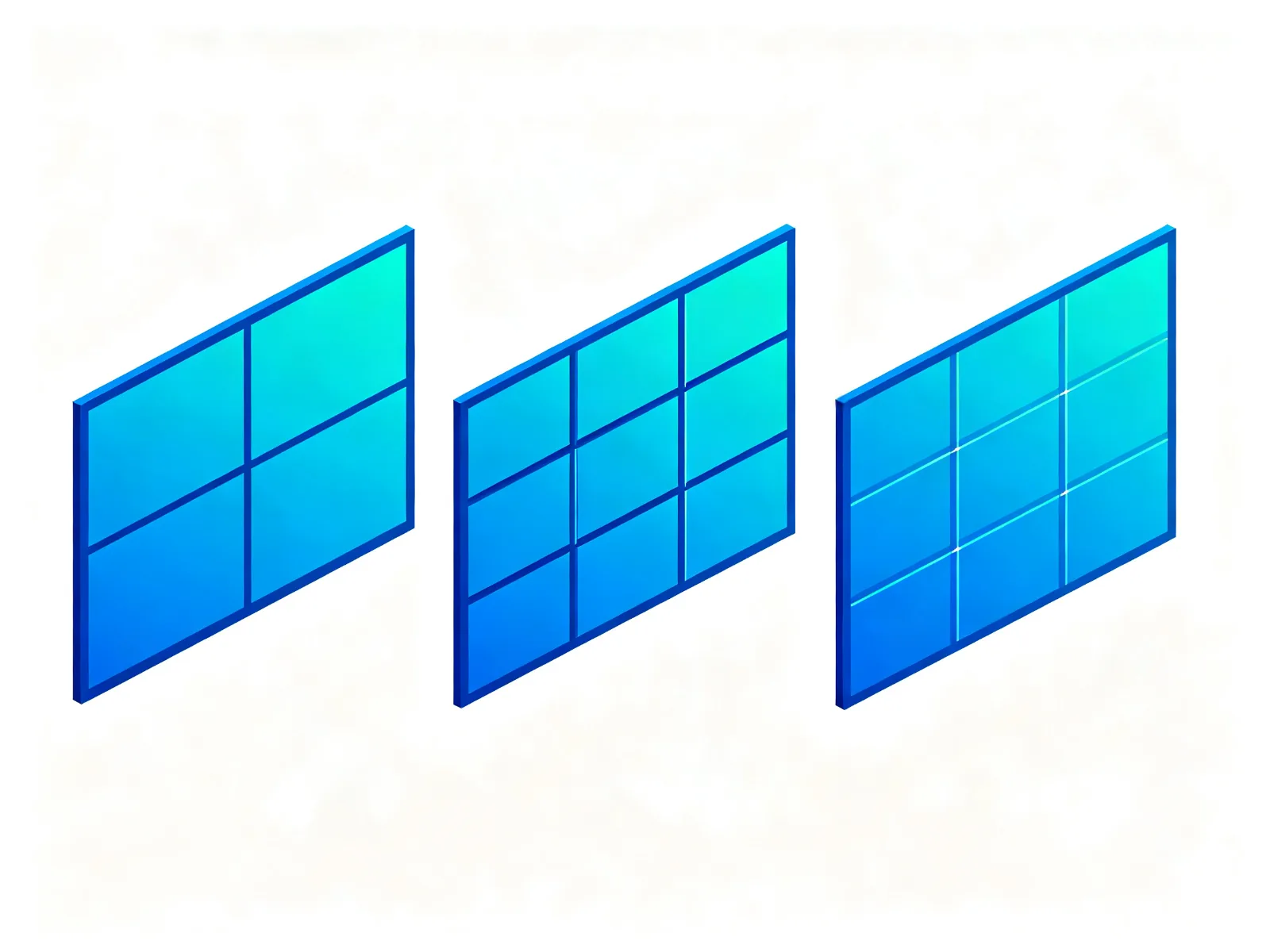
Panels dominate the number, which is why most buyers negotiate only that line. But the controller stage deserves attention: a controller that cannot handle your input matrix or redundancy needs today will limit how the wall is used later. The Qtenboard engineering team sizes the controller to the actual signal plan during pre-sales, so the quoted configuration matches the deployed one.
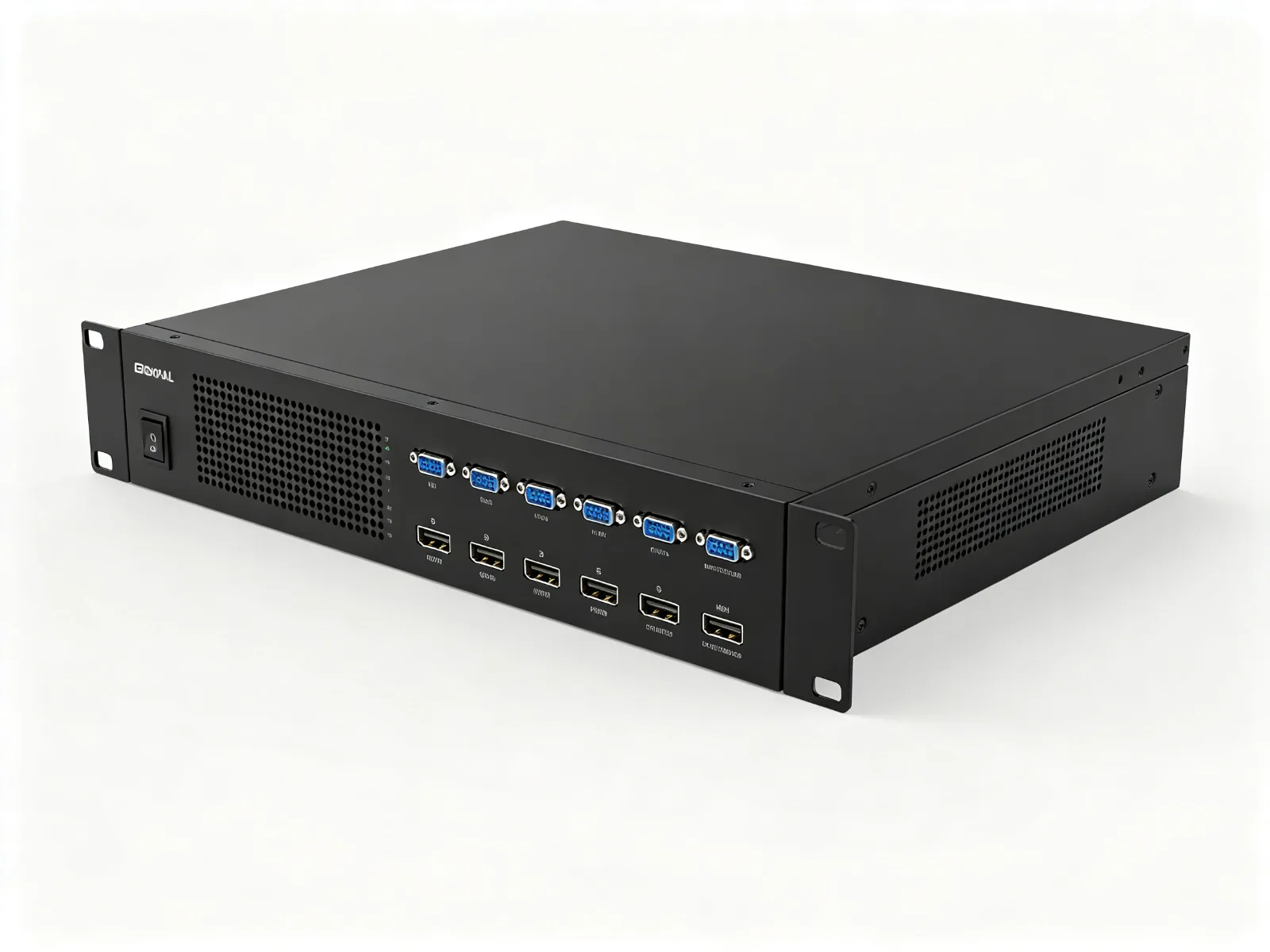
3. 2x2, 3x3, 3x4: configuration cost comparison
Most classroom, lobby, and control-room projects fall into one of three configurations. The table below uses a 46-inch panel at typical brightness as the planning base. Treat the bands as budget ranges, not quotes: a 55-inch or high-brightness build can push each band up by 30–50%.
| Configuration | Panels | Approx. screen area (46") | Typical project band (USD)* | Best fit |
|---|---|---|---|---|
| 2x2 | 4 | ≈ 4.0 m² | $4,000 – $7,000 | Meeting rooms, retail counters, small lobbies |
| 3x3 | 9 | ≈ 9.0 m² | $9,000 – $16,000 | Corporate lobbies, campuses, control-room test sites |
| 3x4 | 12 | ≈ 12.0 m² | $12,000 – $21,000 | Large lobbies, command rooms, exhibition halls |
4. Three engineering choices that lower total cost of ownership
Beyond the quote, three technical decisions drive down the video wall TCO over the system's lifetime. These are the points we recommend you verify with any supplier — and the points Qtenboard designs around.
4.1 Modular panel structure
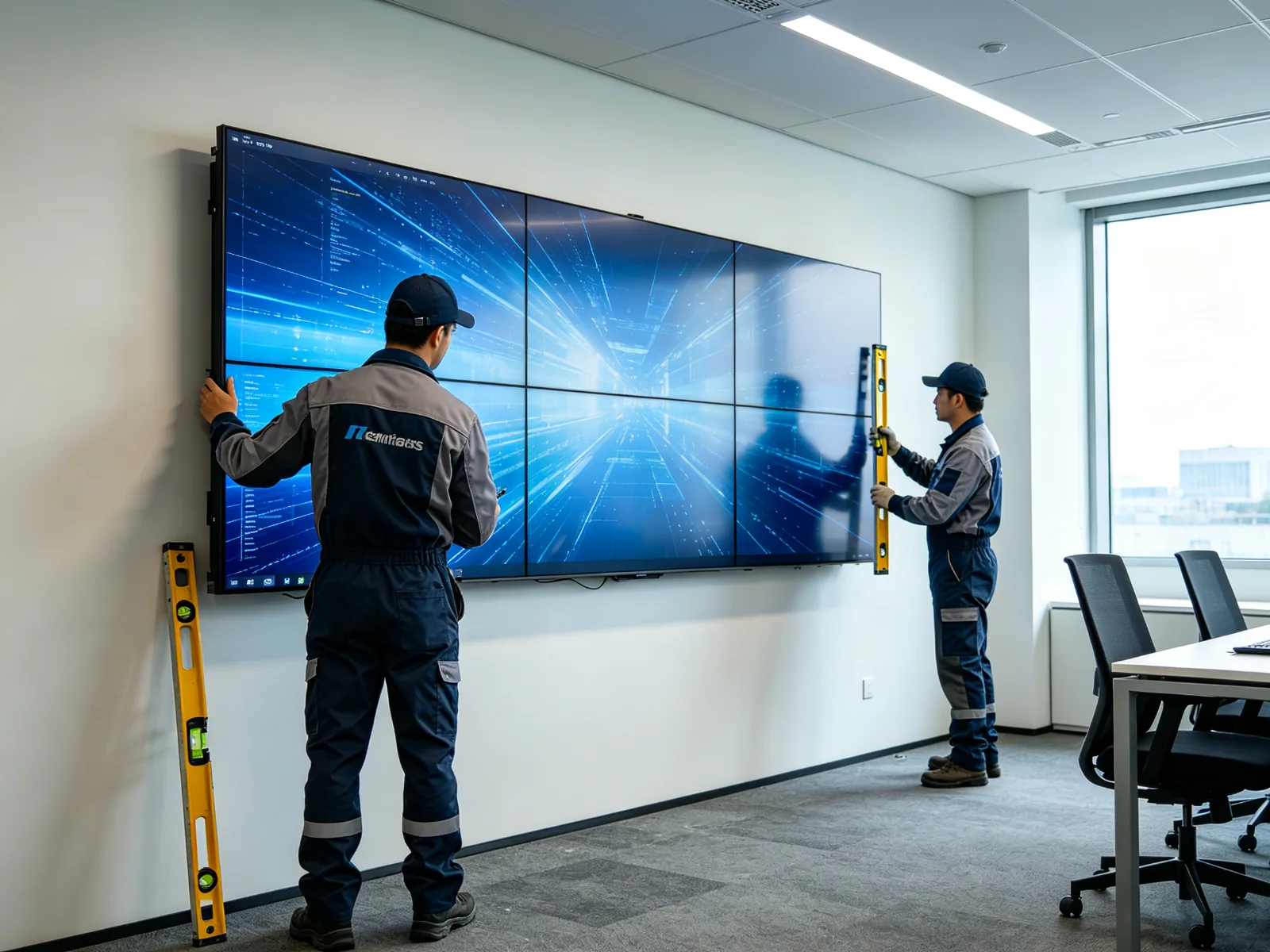
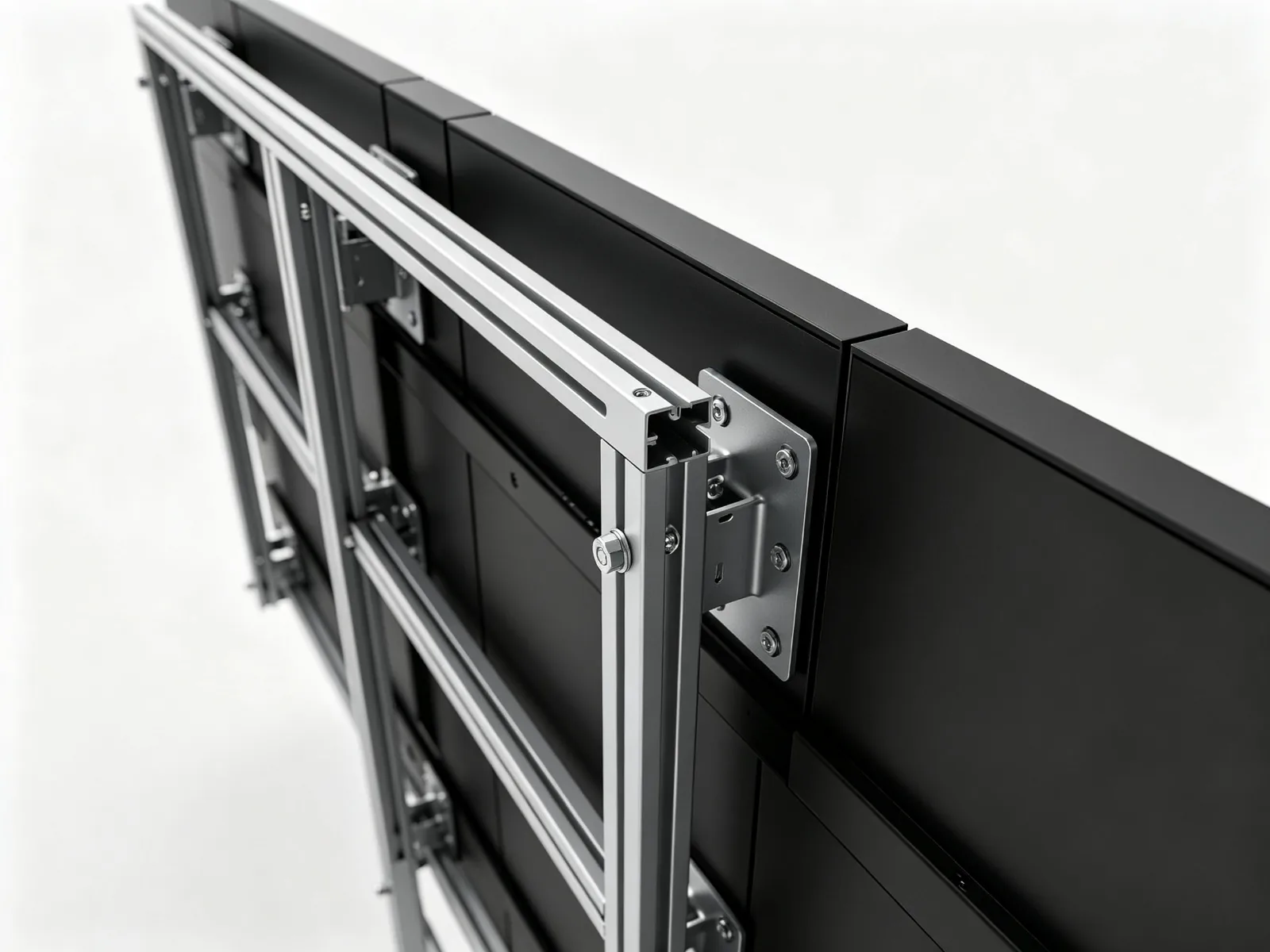
A modular design — individual DID units on a shared steel frame with aluminum profiles — lets each panel be installed, leveled, and later swapped independently. This cuts installation and dismantling labor, and when one panel needs service you do not take the whole wall down. Labor is one of the least negotiable cost stages, so fewer hours directly protect your LCD video wall cost baseline.
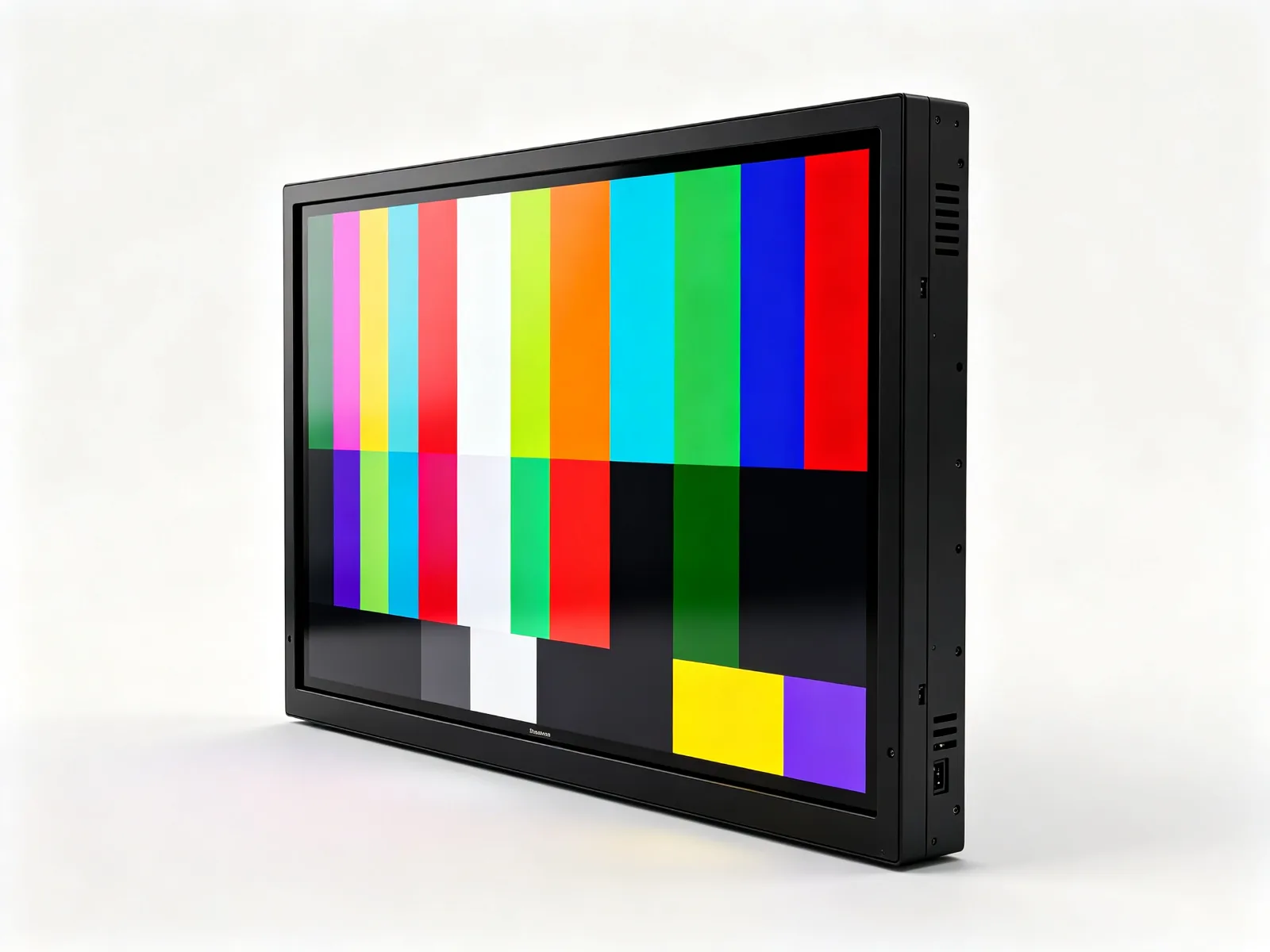
4.2 DID industrial panels with 60,000-hour backlight life
Consumer-grade LCDs are not built for 16-hour daily operation. Industrial DID panels are rated with a backlight life of around 60,000 hours — roughly 10+ years at school or office duty cycles. Spread over that lifetime, the per-hour display cost drops sharply and the maintenance stage of your TCO shrinks. Always ask for the backlight life in writing.
4.3 Precision bezel, 0.88–3.5mm
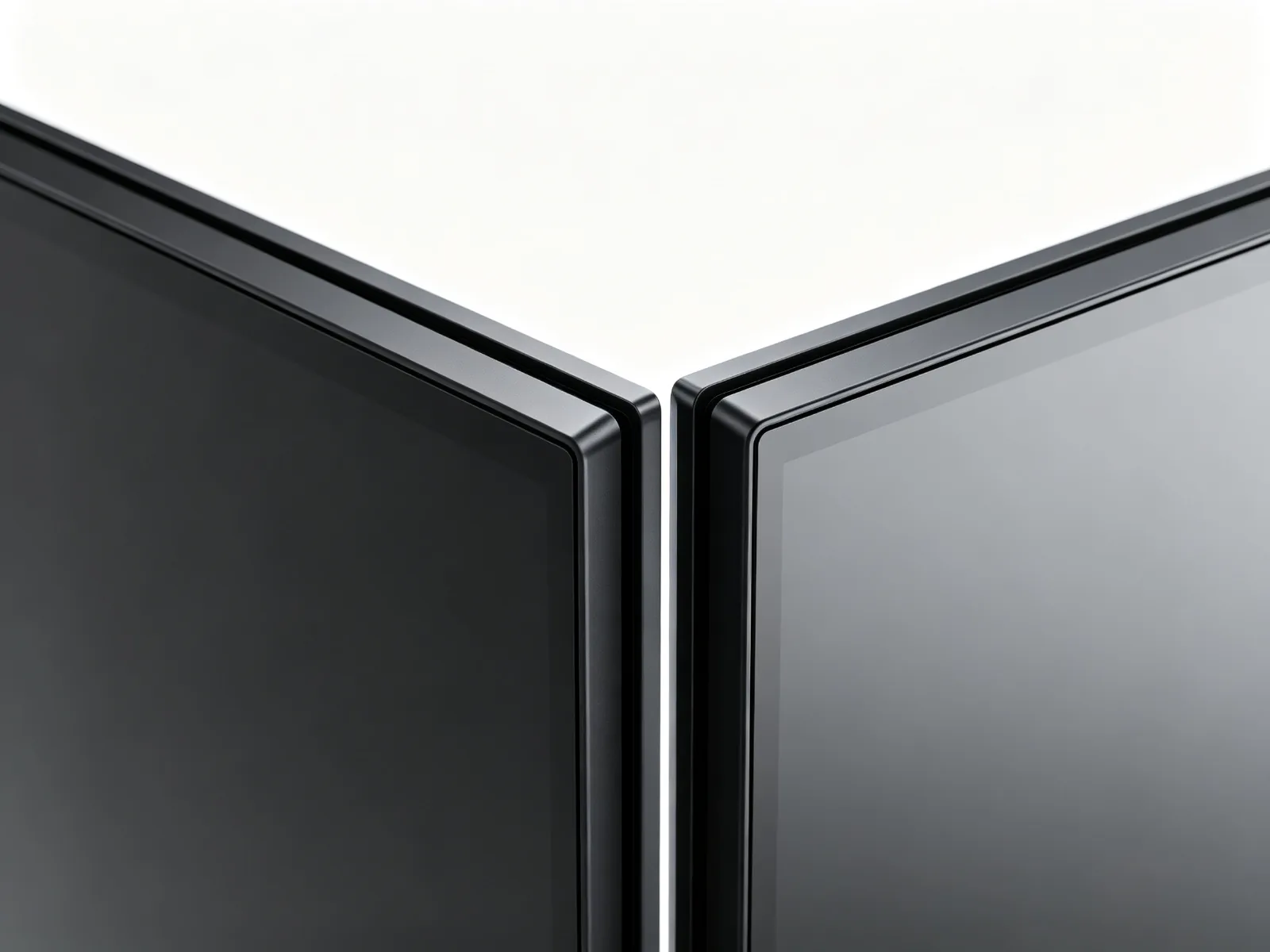
The seam between panels is where a wall looks "cheap" or "premium." Precision bezels from 0.88mm to 3.5mm create tight, even seams that reduce visual distraction and require less post-installation calibration and fewer rework visits. In control rooms where operators watch the wall all day, seam quality is a usability issue, not just aesthetics.
5. A five-year TCO example you can reuse
Here is a working example for a 3x3, 46-inch build. It is illustrative: replace the ranges with your own quotes and local labor rates, and the structure still holds for your budget approval.
| Item | Year 0 (CapEx) | Years 1–5 (OpEx) | Notes |
|---|---|---|---|
| Panels (9 × DID) | $7,500 | — | Mid-grade, typical brightness |
| Controller & cabling | $1,600 | — | Includes input matrix and spare cable set |
| Structure & installation | $2,400 | — | Frame, profiles, labor, commissioning |
| Energy (16h/day) | — | $1,150 | ≈ 300W average draw, commercial rates |
| Maintenance & spare panel | — | $900 | Annual service + one spare panel reserve |
| Total | $11,500 | $2,050 | ≈ $13,550 over 5 years |
Notice what changes the conclusion: at roughly $13,550 over five years, the per-panel quote is only ~55% of the true video wall TCO. Present CapEx and OpEx in one table and finance sees the full picture — the project survives a single review meeting.
6. What to ask suppliers: the RFQ checklist
To compare apples with apples across suppliers, ask every vendor for a line-item quote covering at least these twelve items. If a supplier can only give a per-panel price, that is your signal that the video wall price B2B comparison will be incomplete.
The 12-line RFQ checklist for an LCD video wall project
- Panel spec — size, resolution, brightness, contrast, bezel width
- Panel grade — DID industrial grade confirmed, backlight life in hours
- Panel count & layout — 2x2, 3x3, 3x4 or custom, with seam diagram
- Controller — model, input/output matrix, 4K/8K capability, redundancy
- Structure — wall-mount frame and aluminum profiles, load calculation
- Cable set — signal and power cabling included or extra
- Installation & commissioning — labor hours, on-site calibration, timeline
- Transport & customs — freight, packaging, import duties (often missed on overseas projects)
- Warranty — duration, what is covered, panel replacement terms
- Spare parts — recommended spare panel and controller availability
- Maintenance contract — annual service scope and cost
- Technical support — remote support, training, documentation language
7. Budget approved: the takeaway
A defensible budget is built on a four-stage model — panels, controller, installation, maintenance — with a five-year horizon. Compare configurations on total project band, not unit price. And verify the three engineering choices that protect TCO: modular structure, DID panels with long backlight life, and precision bezels.
When you need a partner that can quote all four stages from one factory and stand behind the numbers with drawings, specs, and technical support, the Qtenboard team works directly with system integrators and project buyers on bulk projects, including RFQ documentation for tenders.
Get a line-item TCO quote
Send us your wall size, panel preference, and room conditions. We will respond with a four-stage breakdown, configuration drawing, and RFQ documentation for your budget approval.
Email info@qtenboard.asiaDisclaimer: figures in this article are planning ranges compiled from typical B2B projects and standard specifications, and do not constitute a quotation. Actual pricing varies with panel size, brightness, configuration, region, and market conditions. Always request a written line-item quote before committing budget. © 2026 Qtenboard.