Many airport, metro and railway procurement teams directly adopt ordinary commercial display schemes without considering transit‑specific operating conditions. When deploying an Tường video LCD, projects often run into practical risks: frequent crash caused by long‑hour continuous operation, signal abnormality under multi‑source parallel input, hardware damage from dust and frequent pedestrian contact, which seriously interfere with normal passenger information release.
QTenboard has accumulated rich practical experience delivering Tường video LCD solutions for transit‑oriented projects. This article sorts out core technical standards and procurement reference for transportation‑hub passenger‑information display projects for buyers and system integrators.
Unique Challenges Faced by LCD video wall in Transportation Hub Scenarios
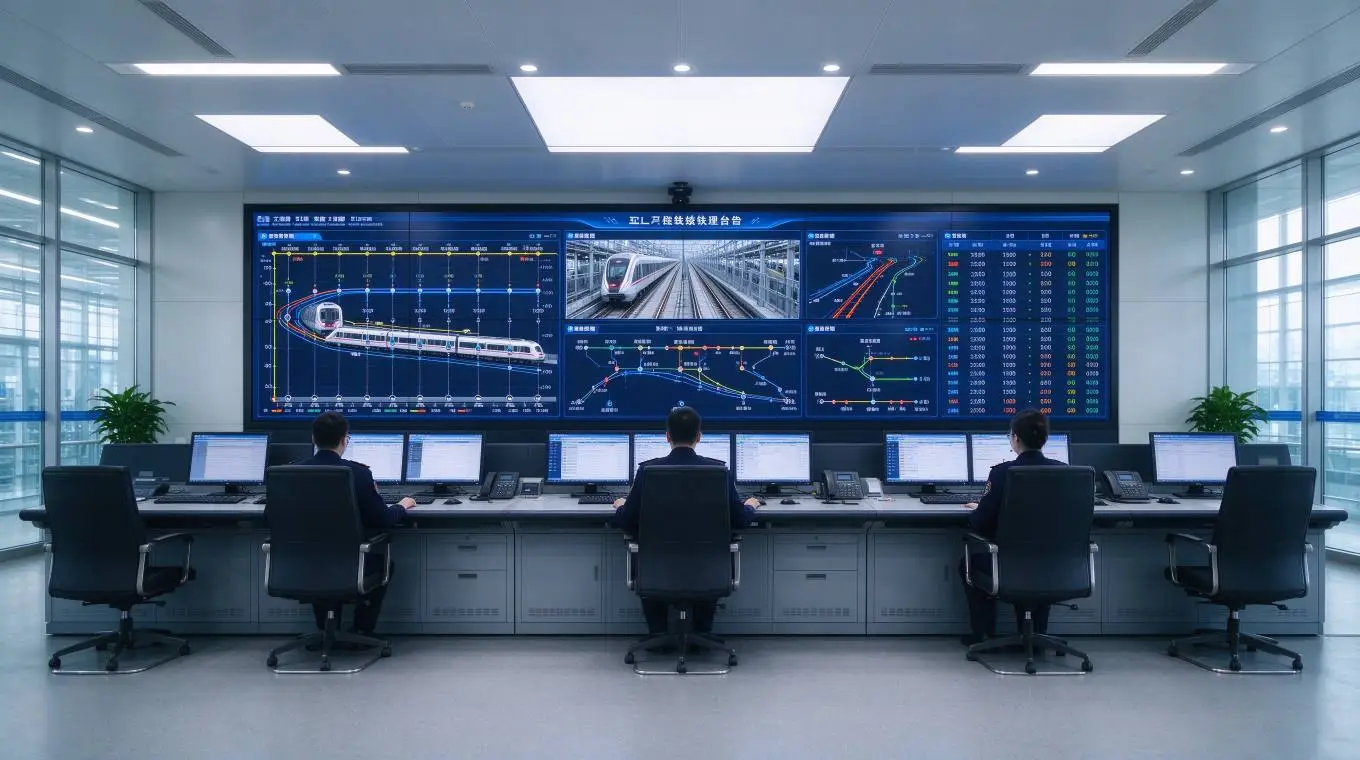
Metro transit dispatch control‑room scenario for LCD video wall
7×24‑hour non‑stop operation requirement
Metro stations, airport terminals and railway hubs require real‑time passenger information release day and night. An Tường video LCD may keep running throughout holidays and off‑peak hours, placing high demands on panel stability and thermal‑dissipation performance, which ordinary commercial panels cannot fully satisfy.
Multi‑source mixed signal access pressure
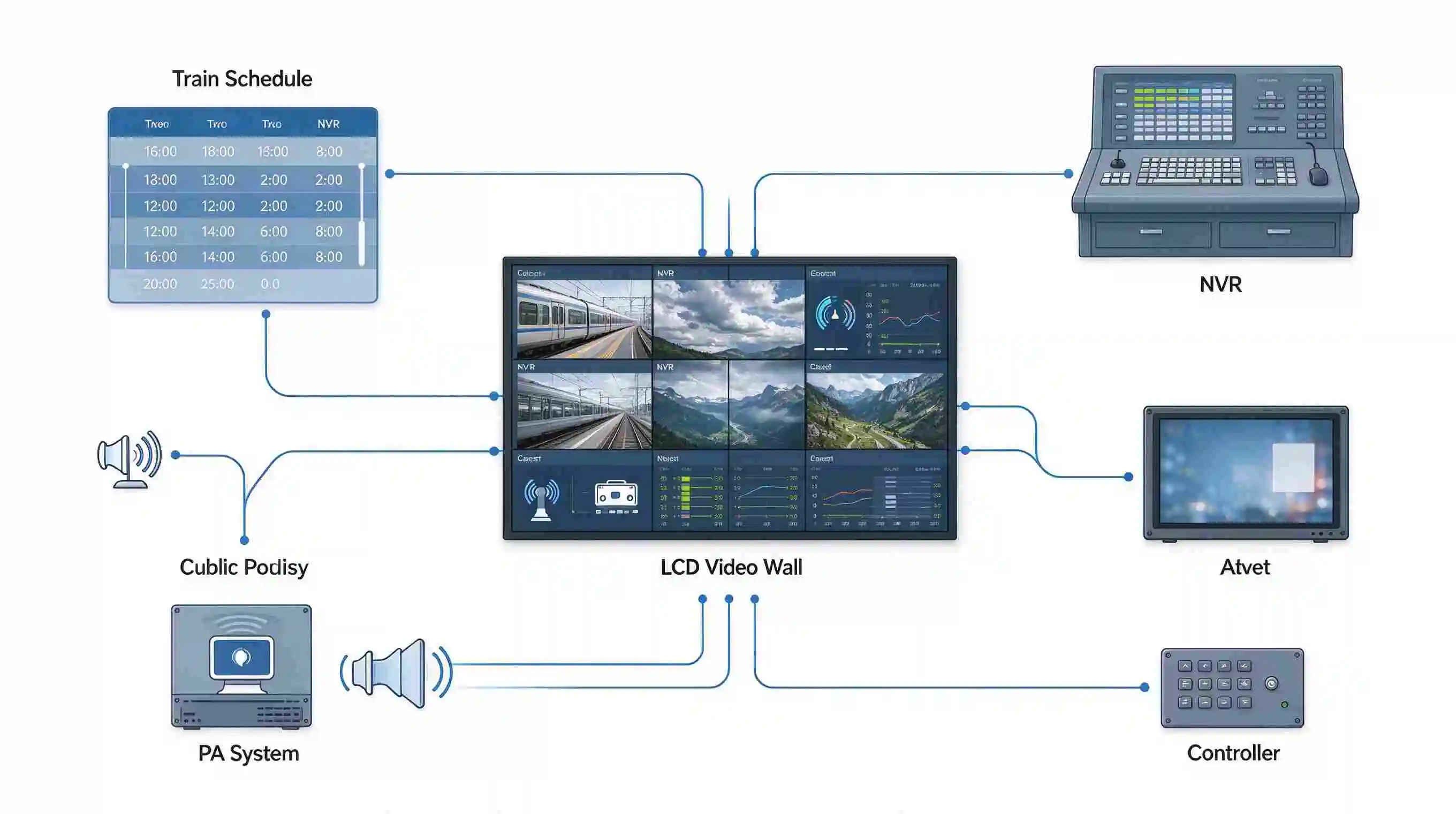
Transportation‑hub Tường video LCD needs to process parallel input including train timetable system, dispatch monitoring NVR, public announcement linkage and advertisement playback. The controller must tolerate frequent signal switching and hot‑swap without screen freezing or signal loss.
High‑density pedestrian environment test
Station hall areas face heavy foot‑traffic, floating dust and temperature fluctuation. An Tường video LCD for transit projects needs dust‑resistant structural design to reduce failure rate caused by complex public‑space conditions.
Core Hardware Selection Standards for Transit‑grade LCD video wall
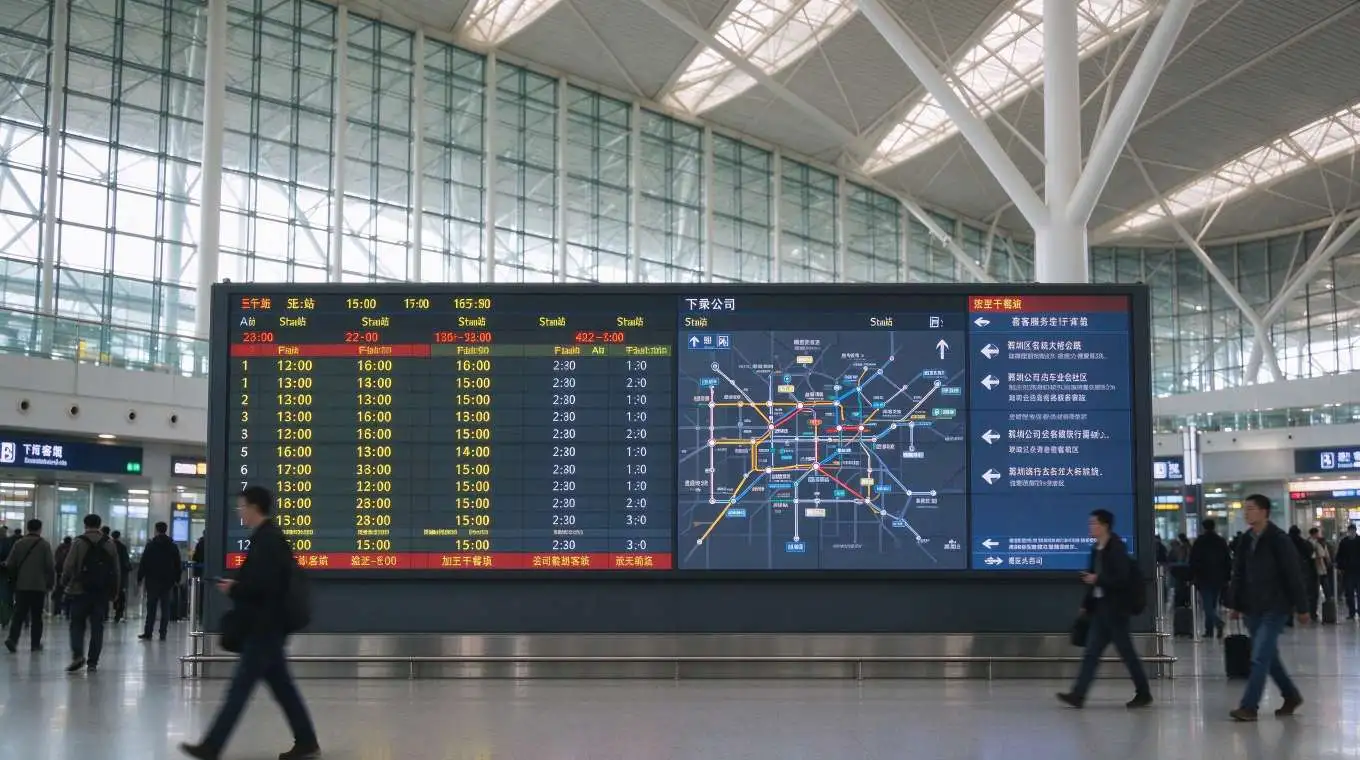
Railway station passenger‑hall way‑finding display of QTenboard LCD video wall
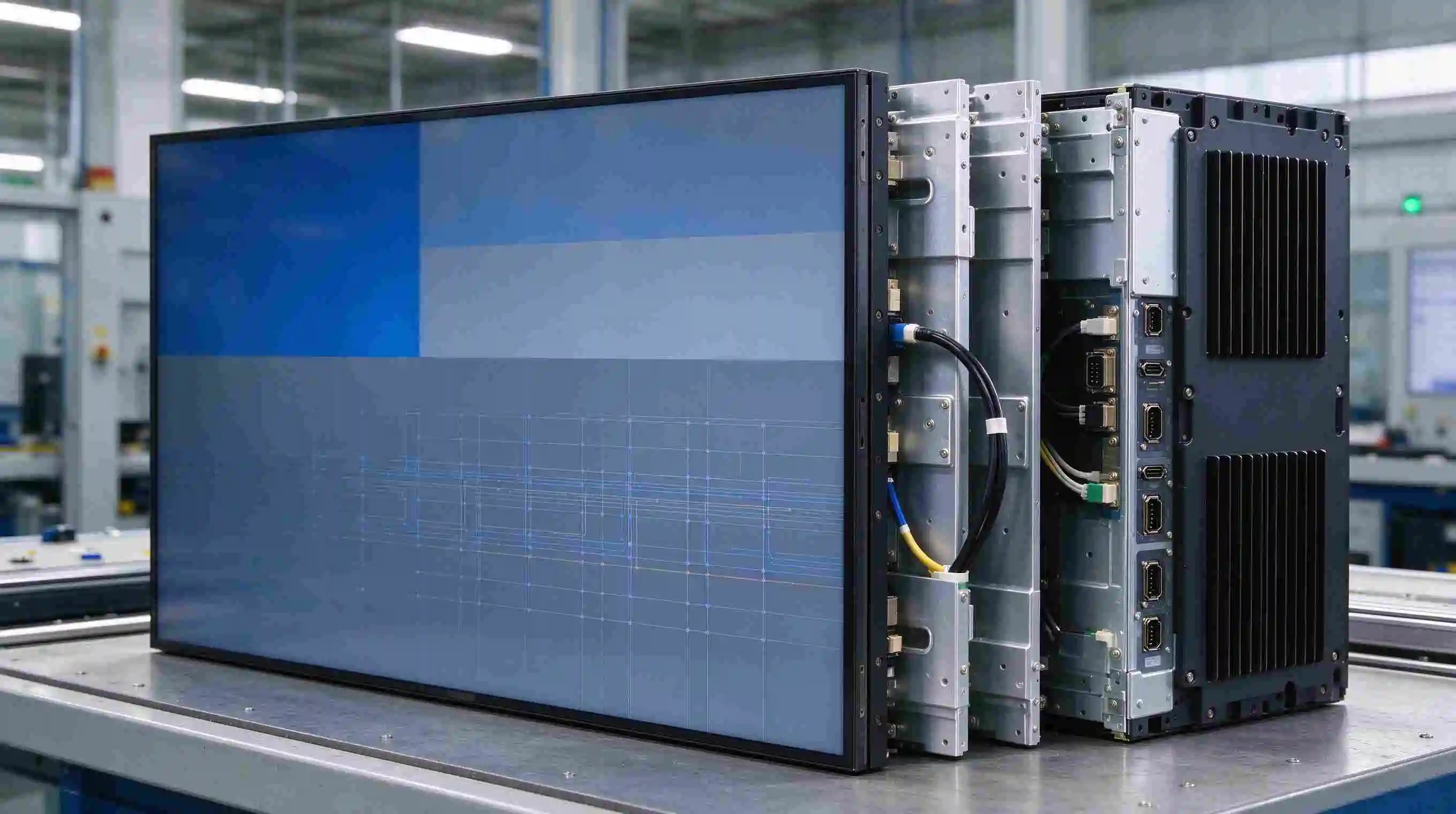
QTenboard transit‑oriented Tường video LCD supports 43 / 46 / 49 / 55 / 65 /75‑inch sizes; splicing‑gap options: 8mm / 3.5mm /1.8mm /1.7mm /0.88mm /0mm; panel suppliers include LG and BOE industrial DID panels; standard resolution 2K; panel service‑life 60000 hours; typical standby‑power ≤3W; operating environment 0‑50℃ non‑condensing.
Panel reliability for 7×24 continuous operation
There is a clear boundary between consumer‑grade commercial panels and industrial DID panels for transit‑grade Tường video LCD. QTenboard transit‑level Tường video LCD adopts industrial‑grade DID panels with complete thermal‑dissipation optimization for long‑time non‑stop operation, reducing aging‑drift risk under 7×24 running cycles.
Splicing gap selection for passenger‑information scenarios
For back‑end dispatch‑control‑rooms, QTenboard recommends narrow‑gap 0.88‑1.8mm Tường video LCD for monitoring‑picture continuity. For passenger public halls, 3.5mm gap can balance visual performance and overall project budget for most railway‑station and airport passenger‑information‑release scenarios.
Brightness & viewing‑angle requirement for large public‑hall space
Transportation hub halls have complex mixed indoor lighting; passengers view screens from multiple oblique angles. QTenboard matches wide‑viewing‑angle parameters for transit‑project Tường video LCD to guarantee readable display effect for multi‑angle audiences in station‑hall environment.
Power consumption & standby management for long‑term running transit projects
For transit projects, reasonable standby‑power management helps lower long‑term operating‑cost. QTenboard industrial‑grade Tường video LCD keeps standby‑power consumption ≤3W and supports timed power‑on/off scheduling for off‑peak transit‑hours.
QTenboard 55‑inch 1.8mm BOE industrial DID panel hardware detail for LCD video wall
Multi‑Signal Access & Passenger‑Information System Docking Requirements
Multi‑signal access logic diagram for transportation‑hub LCD video wall
One common transit‑project pitfall: purchasing Tường video LCD hardware only according to spec sheets without pre‑verifying existing business‑system interface protocols. After delivery, teams find that timetable system and monitoring signals cannot be normally accessed, resulting in reconstruction cost and project‑acceptance delay.
QTenboard pre‑checks interface‑protocol compatibility during pre‑sales phase for transportation‑hub Tường video LCD projects. We sort out controller capability requirements including multi‑window split‑screen, roaming, PIP/PBP and signal hot‑swap tolerance, clarify feasible docking boundaries before placing orders, and help transit clients avoid post‑delivery docking obstacles.
Typical Transportation‑Hub Deployment Case
Project background (desensitized real‑world case): A city rail‑transit station needed dual‑scene upgrade: comprehensive dispatch control‑room plus station‑hall passenger‑information release. Old display hardware was aging; the system required stable 7×24‑hour running and docking with existing metro timetable & monitoring signal system; project needed to satisfy public‑transit tender‑file requirements.
QTenboard solution for LCD video wall:
- Dispatch‑control‑room: 55‑inch, 1.8‑mm gap Tường video LCD, BOE industrial DID panel, optimized thermal‑dissipation design for long‑cycle continuous‑operation.
- Station‑hall passenger‑information area:49‑inch,3.5‑mm‑gap Tường video LCD, wide‑viewing‑angle configuration for multi‑angle passenger‑viewing.
- Deliver supporting video‑wall controller with multi‑signal split‑screen & roaming function for timetable and monitoring‑stream parallel output.
- Supply complete tender‑usable certification‑documents and test‑report copies for public‑transit‑project acceptance.
Project outcome: QTenboard Tường video LCD runs stably under 7×24‑hour working condition, realizes real‑time train‑schedule release and back‑end dispatch‑monitoring functions, and successfully passed rail‑transit‑project acceptance.
Procurement & Tender‑Document Notes for Transportation‑hub LCD video wall
When purchasing an Tường video LCD for public‑transport tender projects, buyers should focus not only on hardware‑parameters but also on tender‑document specifications and transit‑adapted after‑service rules.
Key indicators that can be written into bidding documents
Project tenders may clearly define indicators such as panel 7×24‑hour continuous‑operation requirement, multi‑signal‑access specification, operating‑temperature‑humidity range. As source‑factory, QTenboard can sort‑out configurable indicator descriptions for Tường video LCD tender‑documents.
Certification & test‑report requirements for public transit bidding projects
Public‑transport procurement needs complete product‑certifications and formal test‑reports. QTenboard provides supporting‑document packages formatted for public‑transit tender‑submission for Tường video LCD projects.
After‑service features for transit projects
Maintenance for transportation‑hub equipment must be arranged in passenger off‑peak windows. QTenboard supports remote‑diagnosis guidance and coordinates off‑peak‑time on‑site‑service for transit‑project Tường video LCD deployments, and reserves spare‑part supply mechanism.
Beyond supplying bare‑panel Tường video LCD hardware, QTenboard delivers one‑stop transit‑project solutions: controllers, mounting‑brackets, pre‑sales‑interface‑assessment, tender‑document‑support and post‑delivery‑technical‑guidance for transit‑sector integrators and end‑users.
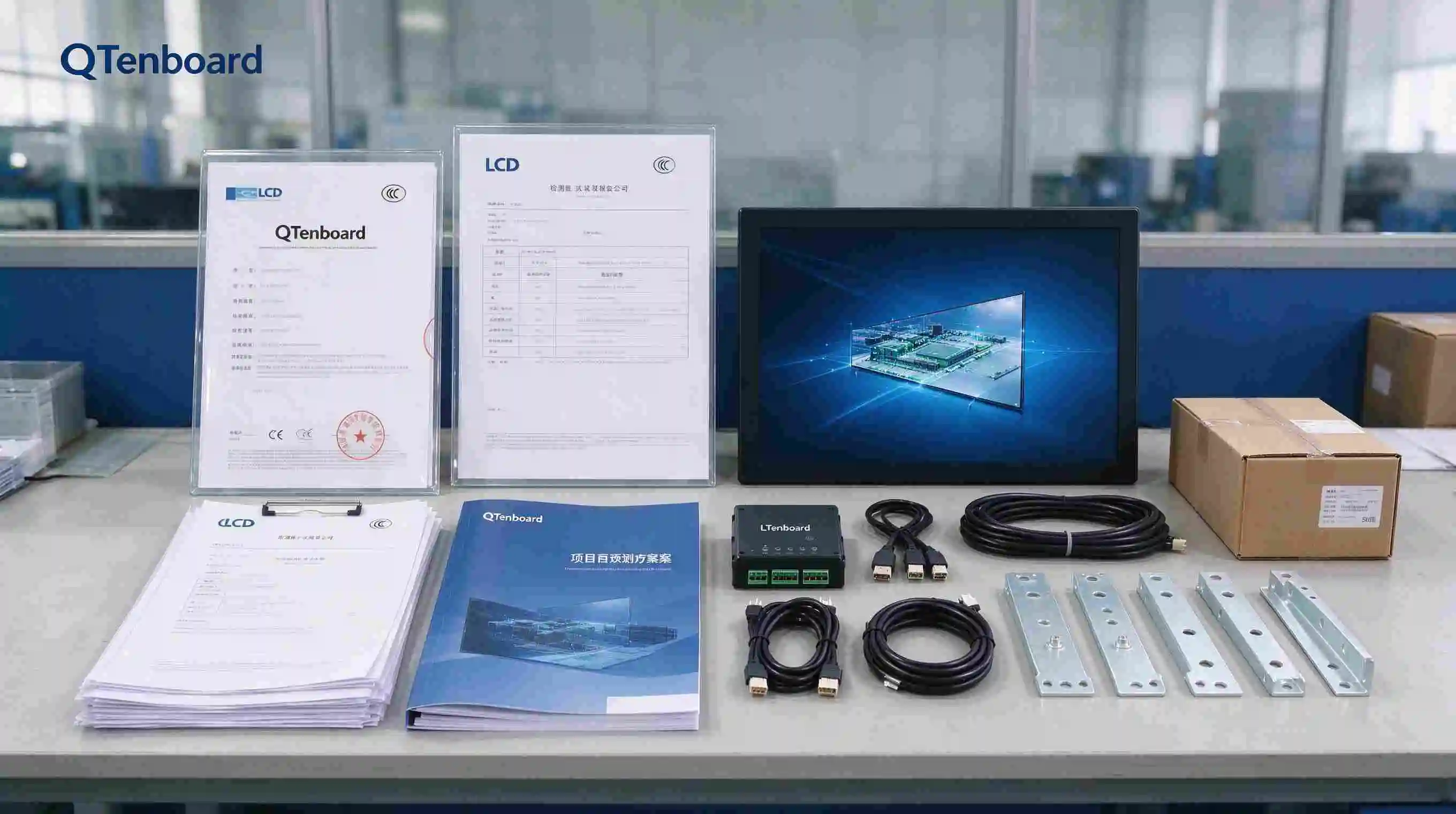
QTenboard transit‑project supporting‑document & accessory package for LCD video wall
Câu hỏi thường gặp
What splicing gap should we choose for transportation‑hub passenger hall versus control‑room scenarios?
For back‑end dispatch‑control‑rooms, QTenboard recommends 0.88‑1.8mm narrow‑gap Tường video LCD to guarantee monitoring‑picture continuity. For ordinary station‑hall passenger‑information release scenarios, 3.5‑mm‑gap can control overall project‑cost while satisfying daily way‑finding‑display‑requirements.
Can QTenboard LCD video wall run stably under 7×24‑hour continuous working conditions for transit projects?
It depends on panel grade and thermal‑dissipation‑structure. QTenboard transit‑grade Tường video LCD adopts industrial DID panels specially optimized for long‑cycle running, with enhanced heat‑dissipation design to adapt 7×24‑hour non‑stop‑operation for metro, railway and airport projects. Ordinary consumer‑grade commercial panels are not recommended for such scenarios.
What pre‑sales evaluation work needs to be completed before ordering transportation‑hub LCD video wall?
Before confirming orders for transportation‑hub Tường video LCD, QTenboard's technical‑team will complete signal‑source sorting, existing‑business‑system interface‑protocol checking, on‑site light‑environment assessment and tender‑document‑indicator confirmation, to reduce post‑delivery docking‑risks.
What kind of after‑maintenance mechanism is suitable for subway / railway station LCD video wall projects?
Transit‑project maintenance should avoid passenger‑rush‑hours. QTenboard provides hardware‑factory‑warranty plus remote‑diagnosis for Tường video LCD. Cooperate with local integrators to arrange off‑peak‑window on‑site‑maintenance and build spare‑part‑reserve mechanism for key public‑transport deployments.
Kết luận
When deploying an Tường video LCD for transportation‑hub projects, procurement teams should prioritize industrial‑grade 7×24‑hour reliability, make reasonable splicing‑gap‑selection for different zones, finish multi‑signal‑docking pre‑evaluation, and fully prepare tender‑required supporting‑documents.
QTenboard accumulates practical experience from multiple transportation‑hub Tường video LCD deliveries, providing end‑to‑end solution‑services for transit‑sector buyers and system integrators instead of only selling display‑hardware.
Request QTenboard transportation‑hub LCD video wall solution brief & tender‑supporting‑document samples
Get scenario‑oriented configuration suggestions and tender‑usable document samples for your transit‑project.
Download Solution Brief
 VIE
 EN
 MAY
 TH
 CHT
 SIN
 BUR
 ID
 FIL
 LAO
 HKM