Introduction: The Pulse of Modern Collaboration
In the rapidly evolving landscape of digital transformation, the interactive whiteboard has emerged as the heartbeat of the modern classroom and corporate boardroom.1 No longer just a luxury, these sophisticated displays—includingCapacitive Smart Board and Infrared Touch Screen Display options—are now mission-critical tools that bridge the gap between physical ideation and digital execution.
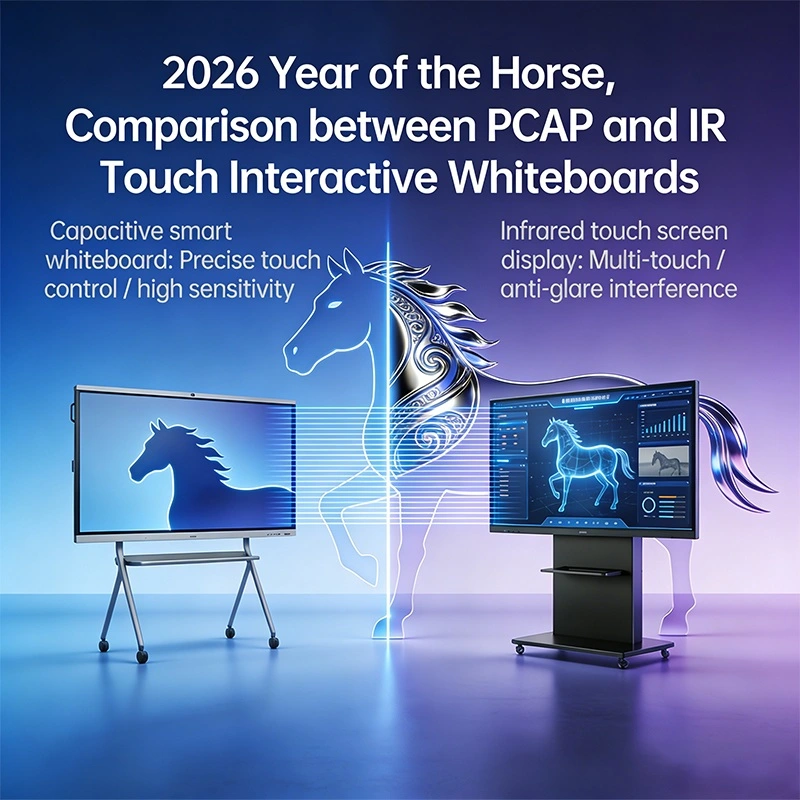
However, as organizations look to invest in these ecosystems, they face a fundamental technical crossroads: Projected Capacitive (PCAP) vs. Infrared (IR) touch technology. While both enable interactivity, the physics behind them dictates how your team will brainstorm, how your students will learn, and how your investment will age over the next decade. For 2026, two of the most searched options are the4K PCAP touch display for business and 86 inch IR interactive whiteboard—each catering to distinct needs.
At Qtenboard, we believe that clarity precedes quality. This comprehensive guide will dissect the nuances of these technologies, helping you understand why our specialized Multi-touch IR whiteboard 40 points systems are setting new standards for the global market.
PCAP technology, the foundation of the Capacitive Smart Board, is the "smartphone experience" scaled up. It relies on a micro-fine conductive grid laminated beneath the display's glass surface—ideal for environments where aesthetics and precision take center stage.
When a finger or a conductive stylus touches the screen, it disrupts the local electrostatic field.2 Sensors located at the edges of the grid detect these changes to triangulate the exact touch location with extreme precision—critical for the 4K PCAP touch display for business users in design and executive settings.
Despite its beauty, PCAP faces hurdles in large-format (65"+) applications:
Best for high-end executive boardrooms and design studios where a flush, smartphone-like aesthetic and pressure-sensitive precision are paramount. The 4K PCAP touch display for business is particularly well-suited for teams that prioritize visual sophistication and fine-detail work over rugged durability.
Infrared touch technology—the core of the IR-based Digital Whiteboard and Infrared Touch Screen Display—operates on the principle of light beam interruption.4 It’s designed for high-traffic, high-use environments like K-12 classrooms and training centers.
An IR-based Digital Whiteboard features a slim bezel containing a dense array of infrared LEDs and photodetectors.5 These components create a constant, invisible grid of light across the screen's surface. When you touch the screen, you "break" the light beams.6 The system calculates the coordinates of this interruption in milliseconds—critical for the 86 inch IR interactive whiteboard, a standard size for modern classrooms.
The gold standard for K-12 education and heavy-use training rooms. It offers the best durability (tempered glass) and supports any input tool, making it the most versatile IR smart board solution. The 86 inch IR interactive whiteboard and Multi-touch IR whiteboard 40 points are top choices for schools and organizations that prioritize longevity, versatility, and cost-efficiency.
Many manufacturers offer basic IR, but Qtenboard has re-engineered the technology to eliminate traditional drawbacks and push the boundaries of what an IR-based Digital Whiteboard can do. Our Multi-touch IR whiteboard 40 points sets the standard for collaborative performance.
While standard boards often support only 10 or 20 points, Qtenboard provides a native Multi-touch IR whiteboard 40 points experience—critical for classroom collaboration.
Why it matters: In a classroom of 30 students, collaborative learning often involves 4 or 5 students working at the board at once. With 40 points of touch, each student can use both hands for complex gestures—rotating images, writing notes, and dragging objects—without any input "ghosting" or lag.
The biggest pain point of Infrared Touch Screen Display boards has historically been "accidental contact." If a teacher's sleeve or a presenter's palm touched the board while they were writing, it would cause an error.
Qtenboard's Solution: Our boards feature a proprietary Smart Anti-False Touch algorithm.7 It recognizes the surface area of the touch object. It can distinguish between a deliberate "writing point" (stylus/finger) and an accidental "interference area" (palm/wrist). This allows for a natural, lean-in writing style that mimics a traditional chalkboard—perfect for the 86 inch IR interactive whiteboard in classrooms.
What is the difference between PCAP and IR touch?
PCAP (Projected Capacitive) offers a sleek, smartphone-like glass design with extreme precision, ideal for small screens and 4K PCAP touch display for business use. IR (Infrared) touch uses light beams in the bezel, offering superior durability, universal input (gloves/stylus), and better cost-efficiency for large-format displays (65"+), including the popular 86 inch IR interactive whiteboard.
As we enter 2026, the interactive display industry is witnessing a pivotal shift toward Hybrid Touch Technology—combining the precision of PCAP with the durability of IR. Leading this trend, Qtenboard has integrated advanced Optical Bonding into its Infrared Touch Screen Display panels, reducing reflectivity by 30% and improving sunlight readability compared to traditional IR displays. This hybrid approach retains IR's universal input compatibility while narrowing the precision gap with PCAP, making our Multi-touch IR whiteboard 40 points and 86 inch IR interactive whiteboard the top choices for 2026 and beyond.
Traditional IR-based Digital Whiteboard displays suffer from a minor visual gap (parallax) between the glass surface and the LCD panel, which can make writing feel less "natural" compared to PCAP. Qtenboard's Zero-Bonding technology eliminates this air gap by permanently fusing the tempered glass layer directly to the LCD panel using a high-performance optical adhesive. This not only removes the visual offset between touch input and digital ink but also improves display brightness by 25% and reduces energy consumption—solving IR's historic visual limitation while preserving its core advantages of durability and universal input, especially for the 86 inch IR interactive whiteboard.
| Feature | PCAP Touch (Capacitive Smart Board) | Advanced Infrared (IR) Touch (Qtenboard) |
|---|---|---|
| Primary Use Case | Executive Boardrooms, Design Studios (4K PCAP touch display for business) | Classrooms, Training Centers (86 inch IR interactive whiteboard) |
| Touch Points | Typically 10–20 | High-density 20–40 points (Multi-touch IR whiteboard 40 points) |
| Object Compatibility | Conductive only (Finger/Active Pen) | Universal (Finger, Glove, Stylus, etc.) |
| Durability | Sensitive conductive layer | High-strength tempered glass + Bezel protection (ideal for heavy use) |
| Anti-False Touch | Electronic sensing | Intelligent AI Algorithm (Palm Rejection) |
| Cost Efficiency | Low for small; Extreme for large (4K PCAP touch display for business) | Optimal for large 65"–110" displays (86 inch IR interactive whiteboard) |
| 2026 Tech Integration | Static capacitive grid (no hybrid support) | Hybrid Touch + Optical Bonding + Zero-Bonding |
Choosing a Qtenboard interactive whiteboard means choosing a system designed for the "real world," not just a laboratory. Whether you need a 4K PCAP touch display for business or a Multi-touch IR whiteboard 40 points, we deliver solutions tailored to your needs.
Qtenboard is built on an open-ecosystem philosophy. Whether your organization runs on Windows 11, Android 13, or macOS, our IR drivers ensure plug-and-play compatibility. This allows you to use your favorite software—from Microsoft Whiteboard to specialized educational tools—with zero calibration lag, whether you’re using a Capacitive Smart Board or IR-based Digital Whiteboard.
We have addressed the "bezel gap" of traditional IR. By using zero-bonding technology, we bring the LCD panel and the tempered glass into direct contact. This reduces the parallax effect (the gap between where you touch and where the "ink" appears), giving you the precision of PCAP with the durability of IR—perfect for our 86 inch IR interactive whiteboard and other large-format models.
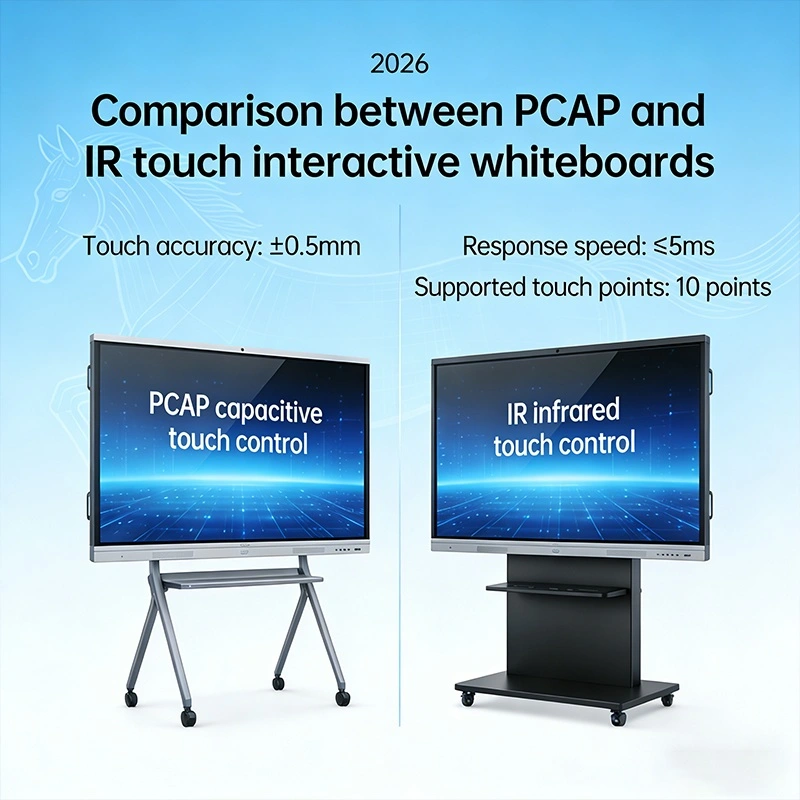
When selecting your next interactive whiteboard, consider the environment and your core needs—whether you’re prioritizing the sleek precision of a Capacitive Smart Board or the rugged versatility of an Infrared Touch Screen Display:
The debate between PCAP and Infrared isn't about which is "better"—it's about which is smarter for your needs. For large-scale collaboration, multi-user engagement, and long-term reliability, the QtenboardIR-based Digital Whiteboard stands unrivaled. For high-end business settings, our 4K PCAP touch display for business delivers the precision and aesthetics that executive teams demand.
By combining 40-point touch with smart anti-false touch technology, we haven't just built a screen; we've built a canvas for the next generation of ideas. With 2026's Hybrid Touch and Zero-Bonding advancements, Qtenboard IR—including our popular 86 inch IR interactive whiteboard—sets a new standard for precision, durability, and cost-efficiency in large-format interactive displays.
Click to read the product details and learn about its functional features and actual performance.
📖 Read Product
 EN
EN
 MAY
MAY  TH
TH  CHT
CHT  BUR
BUR  FIL
FIL  HKM
HKM  ID
ID  LAO
LAO  SIN
SIN  VIE
VIE