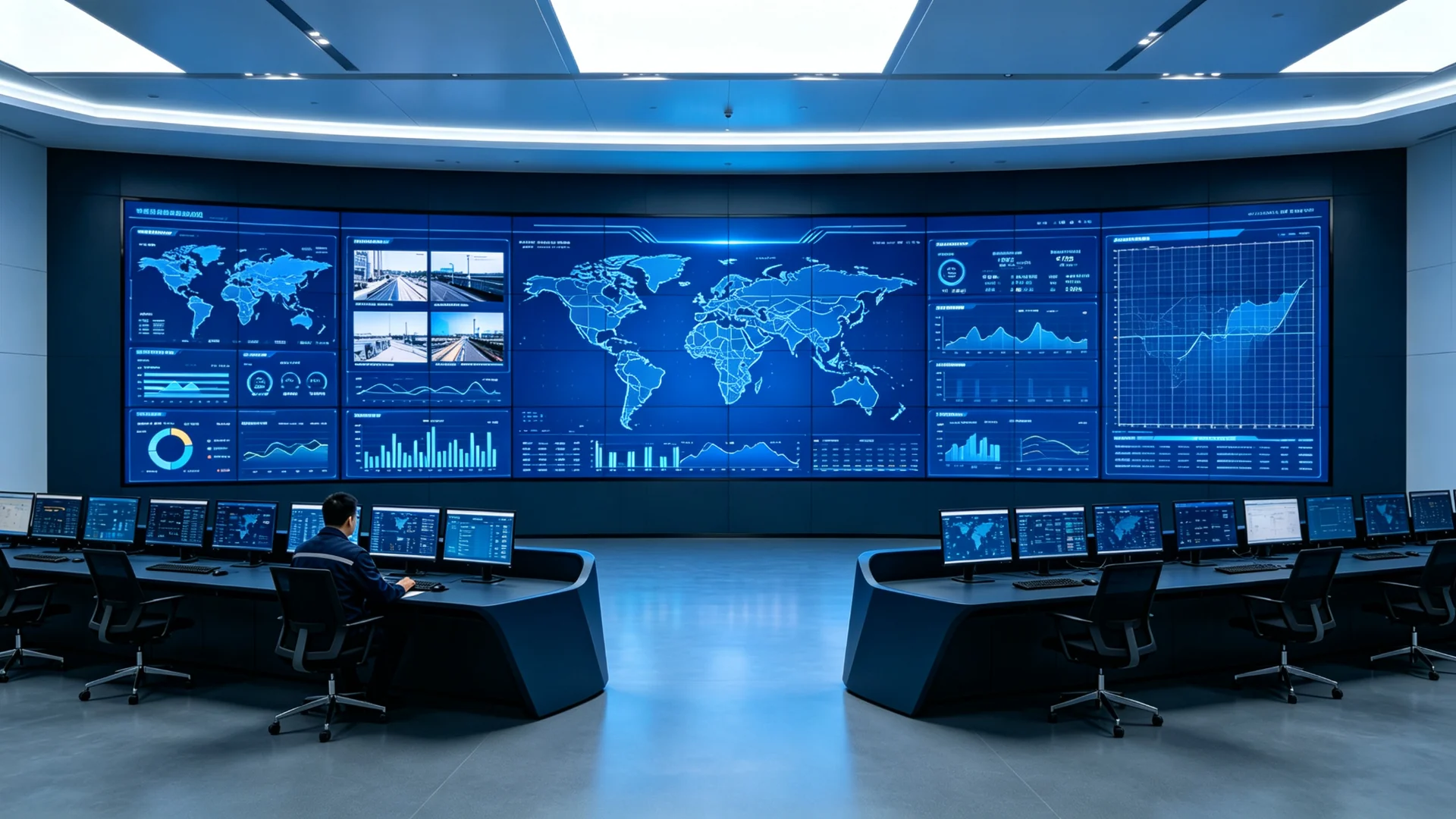
A dimension-by-dimension comparison of Mini-LED direct-view and LCD splicing screen technology — panel structure, color uniformity, burn-in risk, lifespan, and total cost — written for system integrators, brand distributors, and OEM/ODM buyers who need engineering facts, not marketing claims.
The most important fact for any integrator is that Mini-LED and LCD splicing screens are not two versions of the same product. They are built on fundamentally different panel structures, and every downstream difference — cost, maintenance, reliability — follows from that.
AMini-LED direct-view video wall is assembled from an array of discrete LED modules. Each module carries its own red, green, and blue emitters on a PCB, and the pixel pitch (typically P0.9 to P2.5 for indoor walls) is fixed by the LED density. The module is the smallest replaceable unit, and the wall's total brightness can be pushed very high — a genuine advantage in bright lobbies and window-facing spaces, but often far more than a monitoring room needs.
អាន LCD splicing screen is a different device. Each panel is a liquid-crystal cell illuminated by an industrial backlight module, and the video wall is formed by tiling panels edge to edge with ultra-narrow bezels. The smallest replaceable unit is the single LCD panel. For this comparison, we focus on professional DID (Digital Information Display) grade panels — the class Qtenboard uses in its LCD video wall line — because they are engineered for continuous duty in a way consumer-grade panels are not.
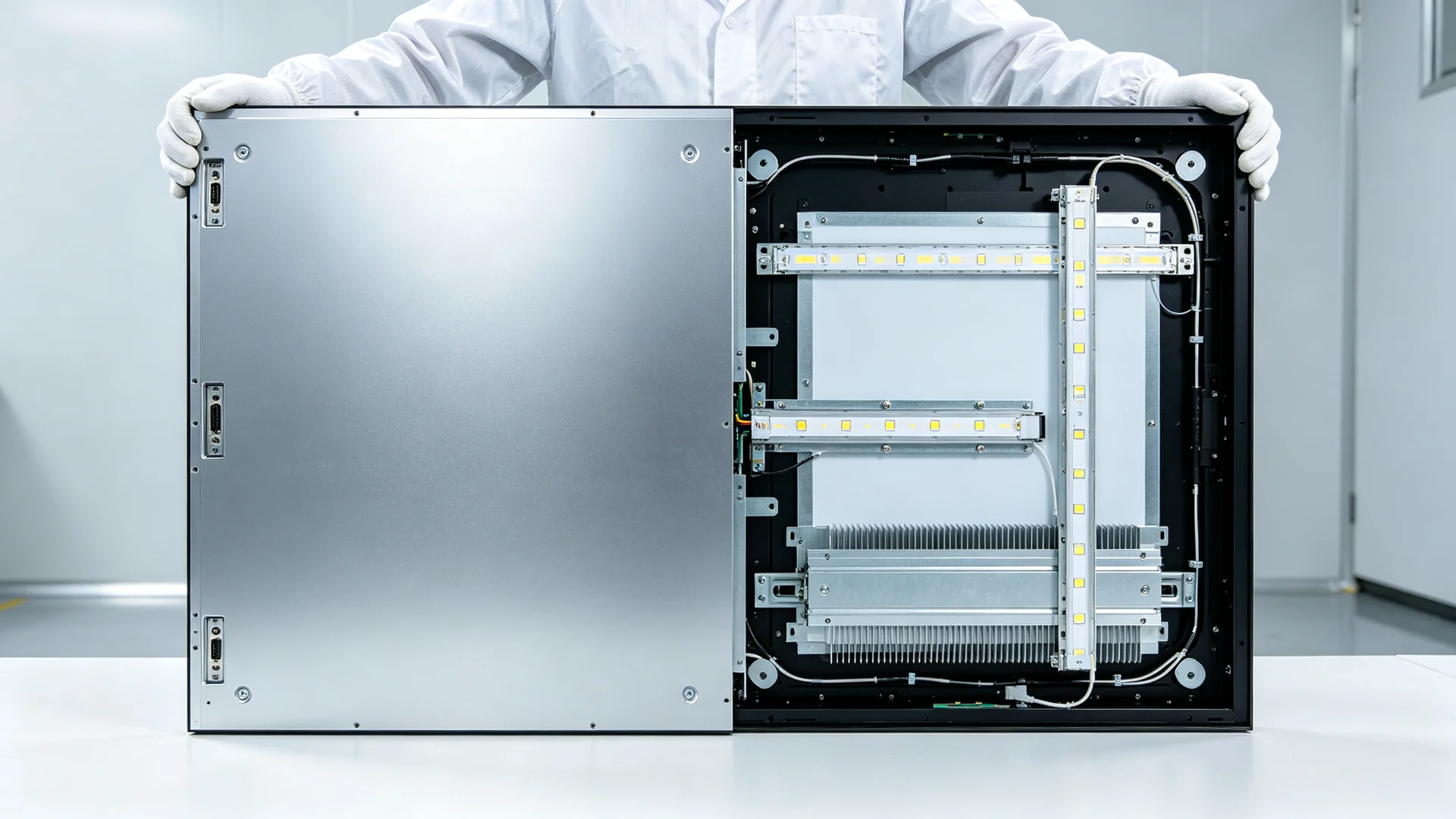
For the integrator, this structural difference decides which spec sheet you must evaluate, which quality-control documents you can request, and what a repair will cost five years after handover. That is the real panel comparison — not a single number, but the whole operating profile of each technology.
Color uniformity is the attribute end clients notice first and complain about most — and it is the one place where the Mini-LED vs LCD splicing screen decision has the clearest technical answer. A video wall is only as uniform as its least uniform panel or module.
ជា មួយ អេក្រង់ បំបែក LCD, visible color differences usually come from two sources: panel batch variance (different production batches have slightly different white points) and backlight decay over time. Both are controllable at the factory. A professional manufacturer such as Qtenboard handles them through panel-to-panel color matching: panels are binned by production batch, matched before assembly, and calibrated to a common color target before shipment. For OEM/ODM partners, calibration records can be provided as factory documentation — evidence your bid documents can cite.
ជា មួយ Mini-LED direct-view, the equivalent problem lives at module level. Module-to-module brightness and color deviation is a known field issue in LED video walls, and acceptable white uniformity depends on the quality of LED binning — which varies widely between factories. Over years of operation, LED luminous decay makes modules drift at different rates, so a wall that was uniform at commissioning can develop a visible "patchwork" effect. Correcting it means per-module recalibration or replacement, not a panel swap.
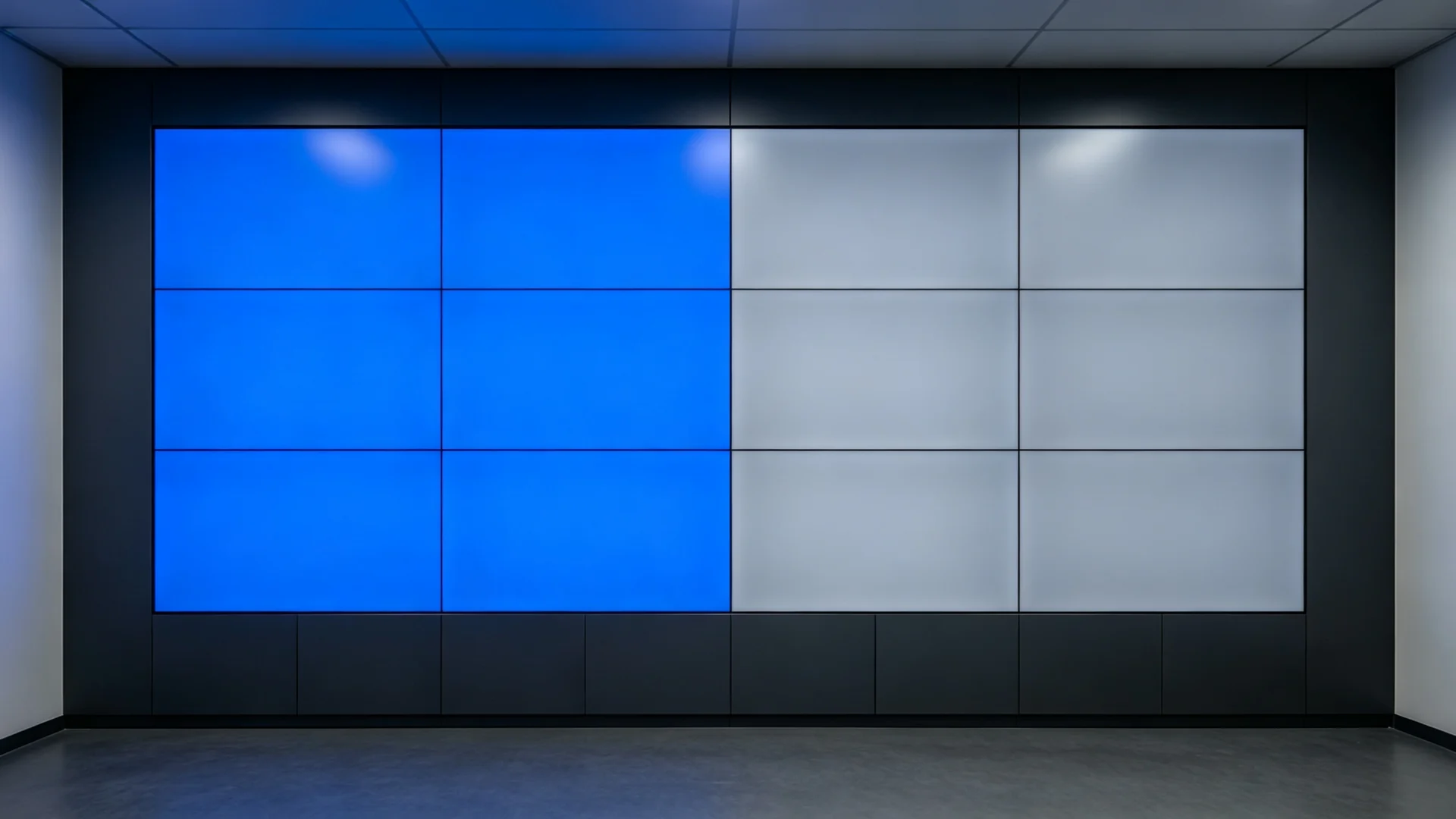
The practical rule for integrators: before you choose either technology, ask the manufacturer for calibration evidence — batch-matched panel or module records, and the target ΔE used at the factory. A supplier that cannot produce this documentation is the higher technical risk, regardless of the panel technology.
Video demonstration of control‑room video wall deployment
Mission-critical rooms run their walls continuously, often with static content — dashboards, maps, camera feeds. That makes burn-in risk and lifespan the second-most important comparison axis.
On an LCD splicing screen, a static image can cause temporary image retention, and in extreme cases permanent burn-in. Professional DID panels mitigate this in design: industrial backlight modules are rated for long continuous life (Qtenboard's DID panels use LED backlights with an expected 60,000-hour lifetime), and the liquid-crystal layer is engineered for static-content endurance. In practice, with a controller-side screen-saver, pixel-shift, or periodic content refresh, permanent burn-in on an industrial LCD video wall is rare, and degradation — when it eventually comes — is gradual and uniform across the wall.
On a Mini-LED direct-view wall, there is no liquid crystal to "stick," so image retention as such does not exist. The life-limiting mechanism is different: LED luminous decay. Each emitter dims over time, but not all modules decay at the same rate, and heat accelerates the process. When a module eventually needs replacement, the new module may not match its aged neighbors in brightness — so a repair can introduce a visible difference that requires recalibration to resolve.
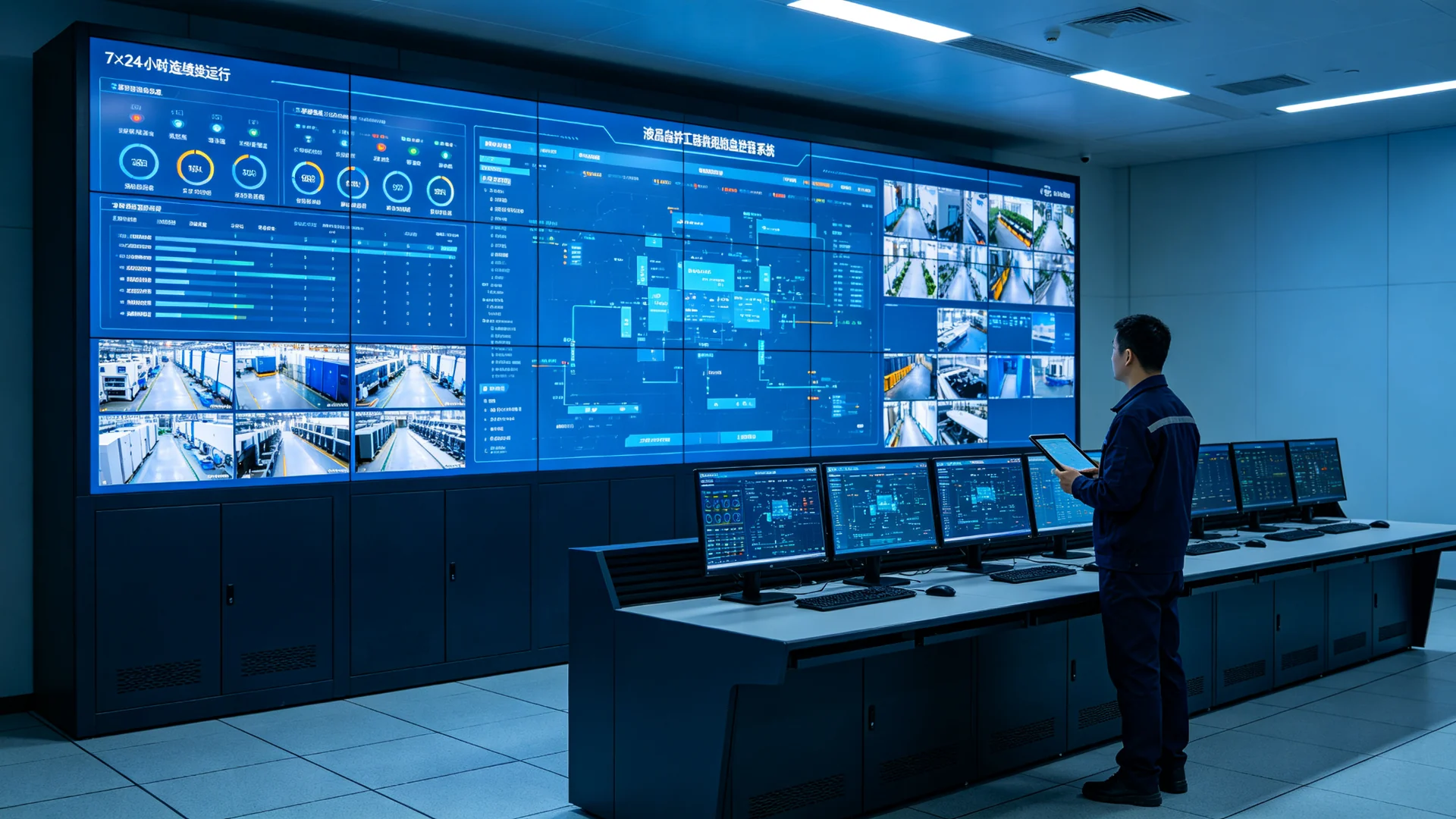
For mean time between failures (MTBF) analysis, the relevant engineering questions are: is the panel built for continuous duty (DID grade, not consumer grade), what is the rated backlight life, and what happens to uniformity after a replacement? For an LCD splicing screen the answers are concrete and testable; for Mini-LED they depend heavily on module binning quality and the calibration workflow of the specific factory.
Cost is where the technologies diverge most sharply in practice. For equivalent indoor applications, an LCD splicing screen carries significantly lower capital cost per square meter than a fine-pitch Mini-LED wall — often a multiple, depending on pitch and panel size. For budget-sensitive projects this alone frequently settles the decision.
Operating cost follows the physics. LCD splicing screens run at 500–700 nits for indoor use, which keeps power draw and heat output modest; Mini-LED walls have higher brightness headroom, but that headroom consumes energy and produces heat that the HVAC system must remove. In a 24/7 control room, the annual electricity and cooling difference is a real line item in a five-year total cost of ownership calculation.
Maintenance economics favor the LCD architecture in most deployments. A failed LCD unit is resolved by swapping a single panel — a low-skill, fast procedure using stocked spares. A failed Mini-LED module requires rework plus recalibration, and the replacement part must be matched to the surrounding modules. Panel-level replacement also keeps the rest of the wall untouched, which matters when downtime is measured in minutes.
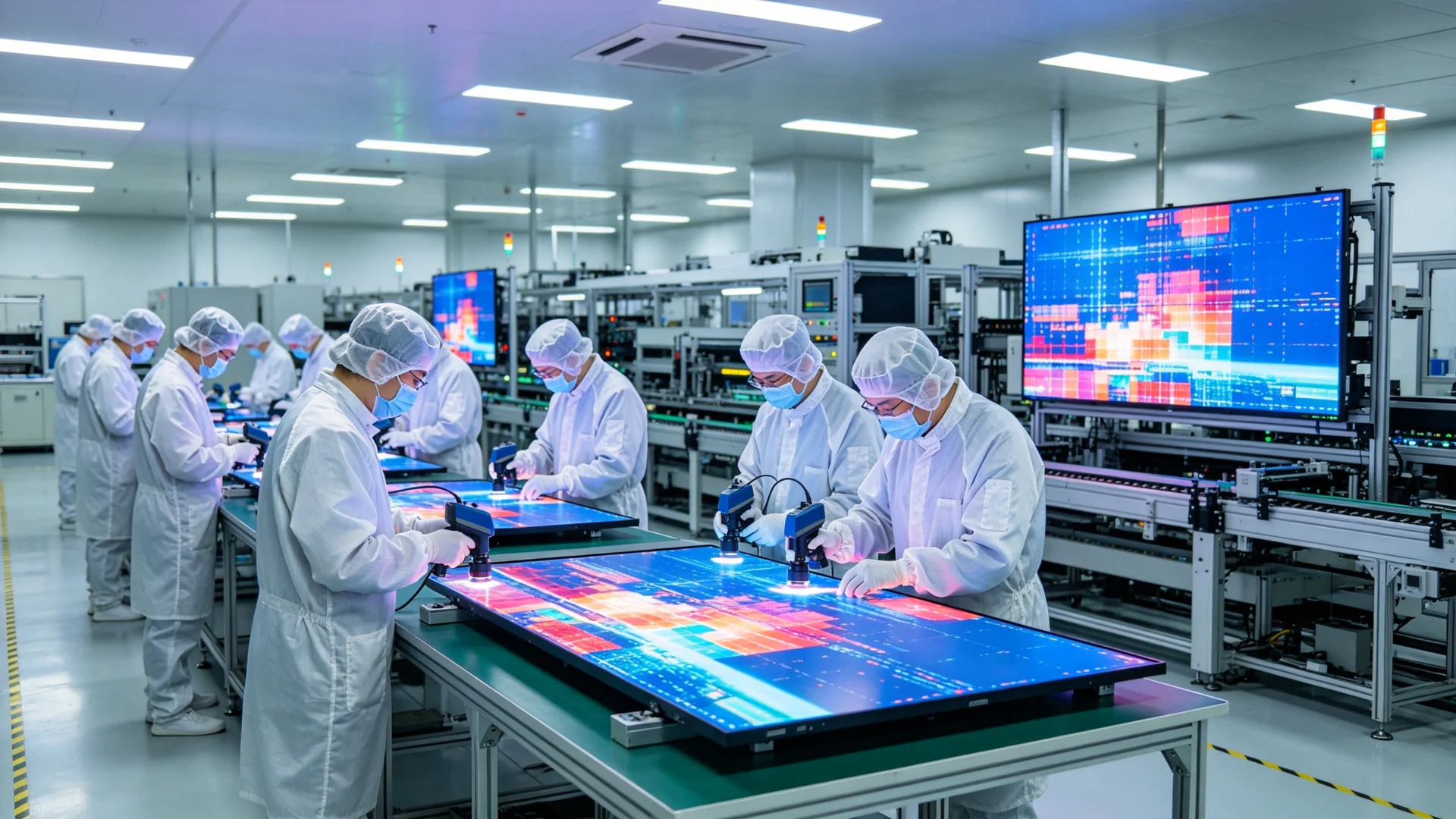
For OEM/ODM buyers specifically, the LCD route means a mature OEM video wall technology supply chain: established panel sourcing, standardized batch control, shorter lead times, and predictable spares. These are supply-chain facts worth weighting as heavily as the panel specifications themselves.
The table below condenses the comparison into a single decision framework. Use it to score your specific project — viewing distance, brightness, duty cycle, and budget — rather than relying on vendor talking points.
| Decision dimension | LCD splicing screen | Mini-LED direct-view |
|---|---|---|
| Panel structure | Liquid crystal + industrial backlight module; tiled with ultra-narrow bezels | Discrete LED modules on PCB; pixel pitch fixed by LED density |
| Minimum viewing distance | Comfortable from 1–3 m at Full HD panel resolution | Pitch-dependent; very close viewing possible at fine pitch |
| ពន្លឺ | 500–700 nits — right-sized for indoor rooms | 800+ nits possible; needed for sunlight-facing spaces |
| Color uniformity | Factory panel matching + calibration; batch-controlled | Module-level binning and calibration required; drift over years |
| Burn-in / retention | Low on DID panels with proper settings; uniform degradation | No image retention; LED decay varies module to module |
| ប្រតិបត្តិការ 24/7 | DID panels designed for continuous duty | Possible; heat management is critical |
| Replacement economics | Single panel swap with stocked spares | Module rework + recalibration; matching aged neighbors |
| Capital cost per m² | Lower — mature, high-volume supply chain | Higher, especially at fine pitch |
| Visual seam | Ultra-narrow bezel, 0.88–3.5 mm depending on model | Virtually seamless at module boundaries |
Choose an LCD splicing screen when the project is a control room, command center, broadcast preview, retail digital signage, education, or transportation display — where viewing distances are close, operation is 24/7, budgets are defined, and predictable maintenance matters. For the large majority of indoor B2B projects, this is the engineering-correct choice.
Choose Mini-LED direct-view when the project is a very large seamless statement wall, sits in extremely bright ambient light, or demands the highest brightness with a budget that absorbs the higher capital and maintenance cost.
As a manufacturer and OEM/ODM partner, Qtenboard publishes the parameters below for its LCD splicing screen line, so integrators and distributors can verify rather than assume. Figures reflect the standard factory configuration published on qtenboard.asia; request the current spec sheet for your region and order volume.
| Panel sizes | 43″ / 46″ / 49″ / 55″ / 65″/ 75″ |
| Bezel options | 0 mm / 0.88 mm / 1.7 mm / 1.8 mm / 3.5 mm |
| ពន្លឺ | 500–700 nits (500 cd/m² standard; 700 cd/m² for high-ambient-light rooms) |
| សមាមាត្រ កម្រិត ពណ៌ | 4500:1 |
| គុណភាព បង្ហាញ | 1920×1080 / 2K or 3840×2160 / 4K per panel |
| Panel type | IPS LCD, 178° viewing angle, 97% color saturation |
| ពន្លឺ ក្រោយ | LED industrial (DID grade), designed for 24/7 continuous operation |
| Signal input | DVI, HDMI, DP; RS232 / LAN control for video wall management |
| Factory quality control | Panel-to-panel color matching, batch control, calibration records on request |
| Warranty & spares | Standard warranty with a spares program; confirm current terms with the sales team |
Specifications are based on the manufacturer's published product documentation and are subject to configuration. Always confirm the exact parameters for your project with the Qtenboard engineering team before finalizing a bid or RFQ.
For the large majority of indoor B2B deployments — control rooms, command centers, retail, education, and transportation — an LCD splicing screen delivers the best balance of color uniformity, 24/7 reliability, and predictable total cost. It is also the lower-risk choice for OEM/ODM buyers because the supply chain is mature and the QC evidence is documentable.
Mini-LED direct-view is a strong technology for specific use cases: large seamless statement walls and environments that genuinely need very high brightness. The Mini-LED vs LCD splicing screen decision should be made on those dimensions — not on a single marketing number.
When your next project needs a video wall manufacturer with factory-level QC documentation, batch-matched panels, and engineering support for bids and proposals, Qtenboard supplies LCD splicing screens as a ready OEM video wall technology partner. Request the current spec sheet, calibration documentation, and sample program through www.qtenboard.asia.
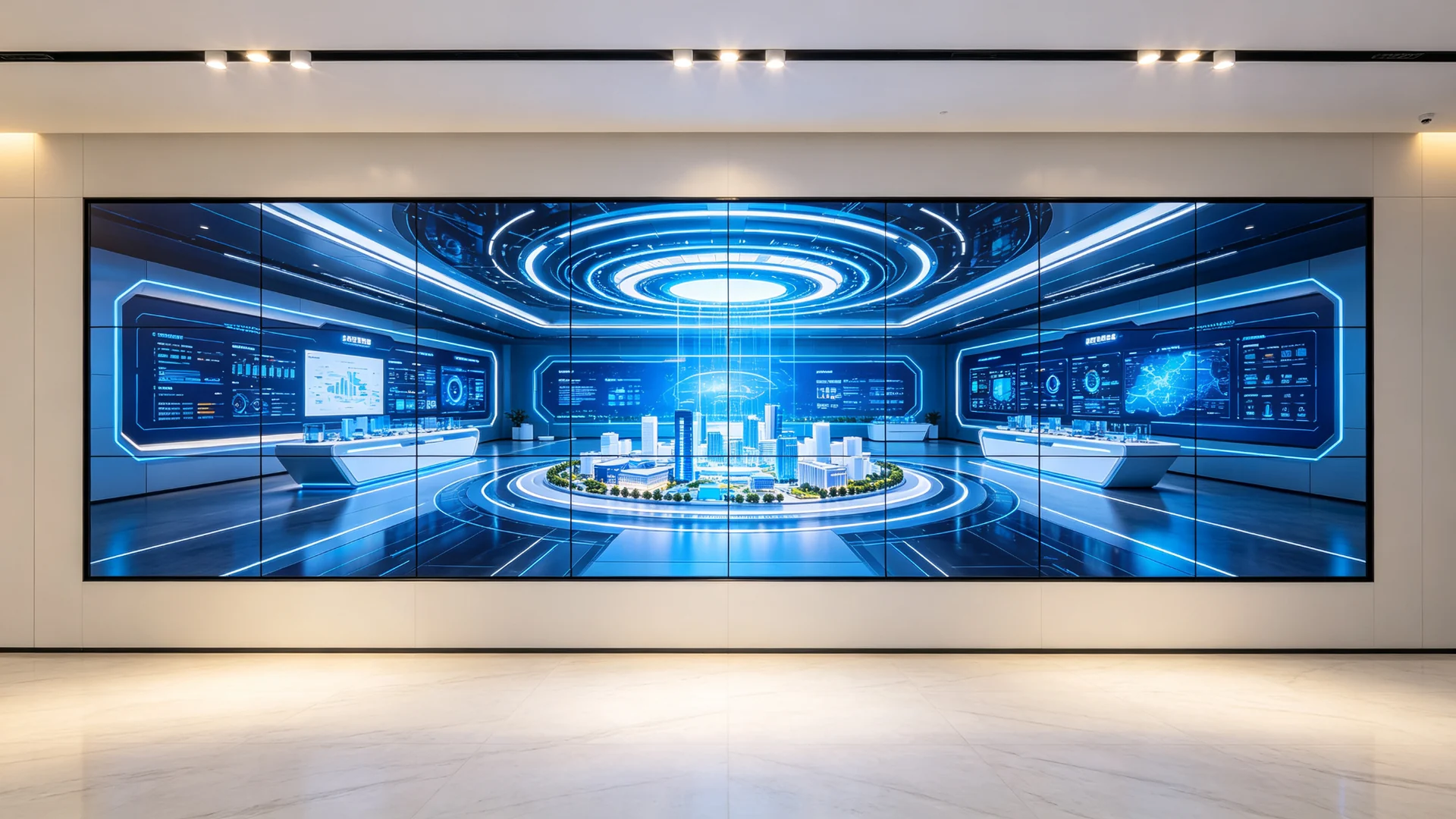
Get the current LCD splicing screen spec sheet, factory calibration documentation, and OEM/ODM partnership details from the Qtenboard team — no generic brochures, just engineering facts you can verify.
Request Specs & Samples
 HKM
HKM
 EN
EN  MAY
MAY  TH
TH  CHT
CHT  BUR
BUR  FIL
FIL  ID
ID  LAO
LAO  SIN
SIN  VIE
VIE